
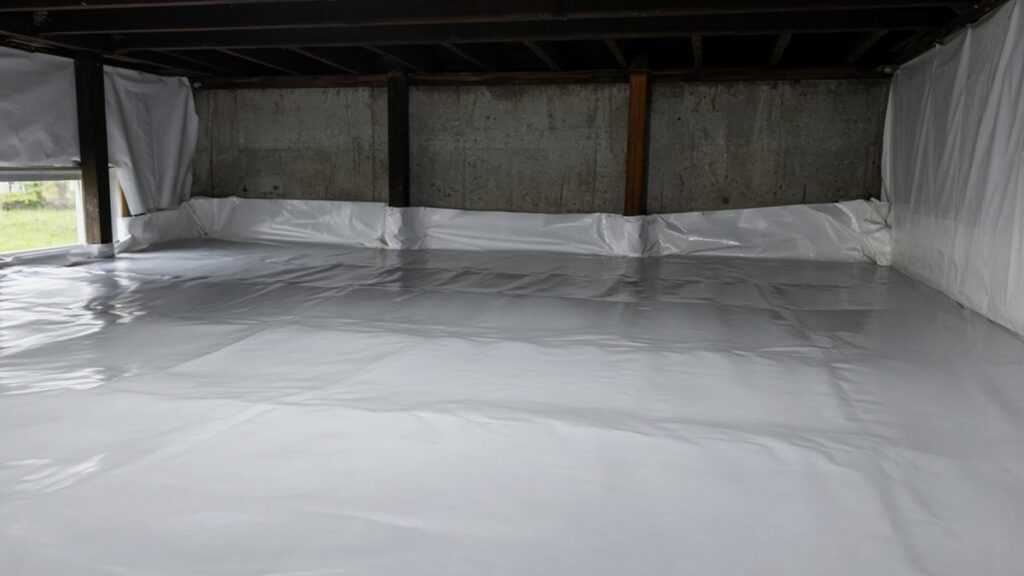
A crawl space vapor barrier keeps ground moisture out of the air. A torn vapor barrier lets that moisture back in, and spring is when you’ll notice. This guide is written for homeowners in Brook Park, Pine County and across Minnesota.
Table of Contents
How barriers get torn
- Workers crawling through for plumbing or wiring
- Animals digging under or chewing through
- Sharp rocks under thin plastic
- Age, as cheap plastic gets brittle
Problems a torn vapor barrier causes
- Damp air that rises into the home
- Musty smells
- Mold on joists and insulation
- Higher humidity upstairs
How to check
Look with a flashlight for rips, gaps at seams and loose edges at the walls. Check for water on top of the plastic or wet soil beneath.
Patch or replace?
- Small tears: patch with tape made for vapor barriers.
- Many tears or thin plastic: replacing with a thicker liner may be better.
- Water under the barrier: deal with drainage first.
A better long-term setup
Thicker liners, sealed seams and edges fastened to walls hold up better. Many homes pair that with sealed vents and a dehumidifier.
Questions about torn vapor barrier? We’re available 24/7. Call 320-280-3522 or Request an Estimate.
Warning signs to watch for
- Standing water or damp soil
- Pests like insects and rodents, which are drawn to moisture
- Musty smells in rooms above the crawl space
- Cold or damp floors
- Visible mold on joists or insulation
What makes crawl spaces a moisture problem
Crawl spaces are out of sight, which makes them easy to ignore. Common issues include:
- Exposed soil with no vapor barrier
- Summer humidity entering through vents
- Standing water after rain or snowmelt
- Cold floors above due to missing insulation
Since air moves upward through a house, crawl space air affects what you breathe upstairs.
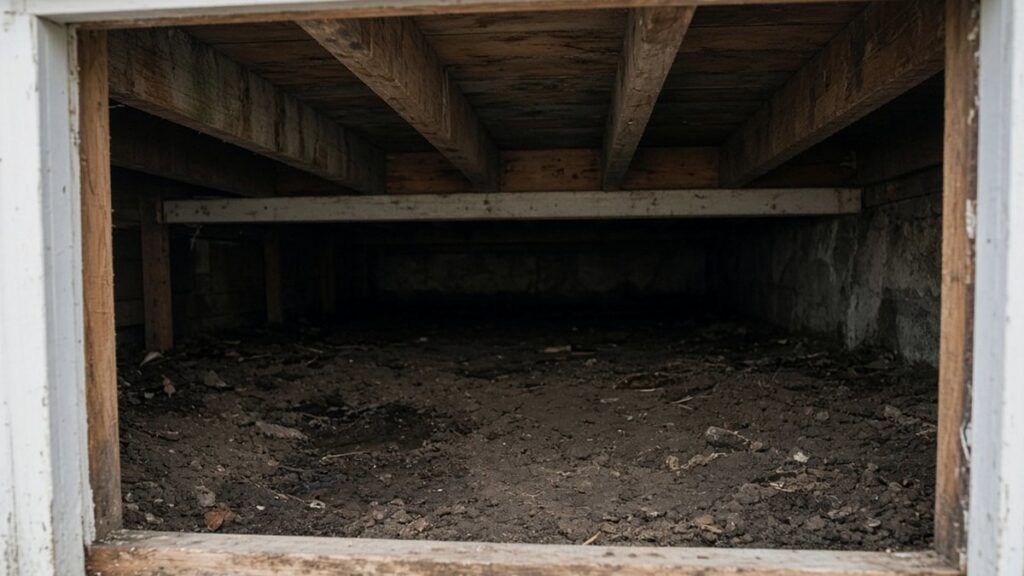
Common crawl space repair approaches
Depending on what’s found, crawl space work may include:
- Vapor barriers: heavy plastic sheeting over the soil to block ground moisture.
- Encapsulation: sealing the floor, walls and vents to create a closed, conditioned space.
- Drainage: directing water to a sump system so it doesn’t pool.
- Dehumidification: controlling humidity once the space is sealed.
- Insulation: on walls or rim joists to reduce cold floors.
Start with an inspection. The right fix depends on where moisture is coming from.
Common mistakes to avoid
- Trapping water behind insulation. Insulating before fixing moisture can lead to rot and mold.
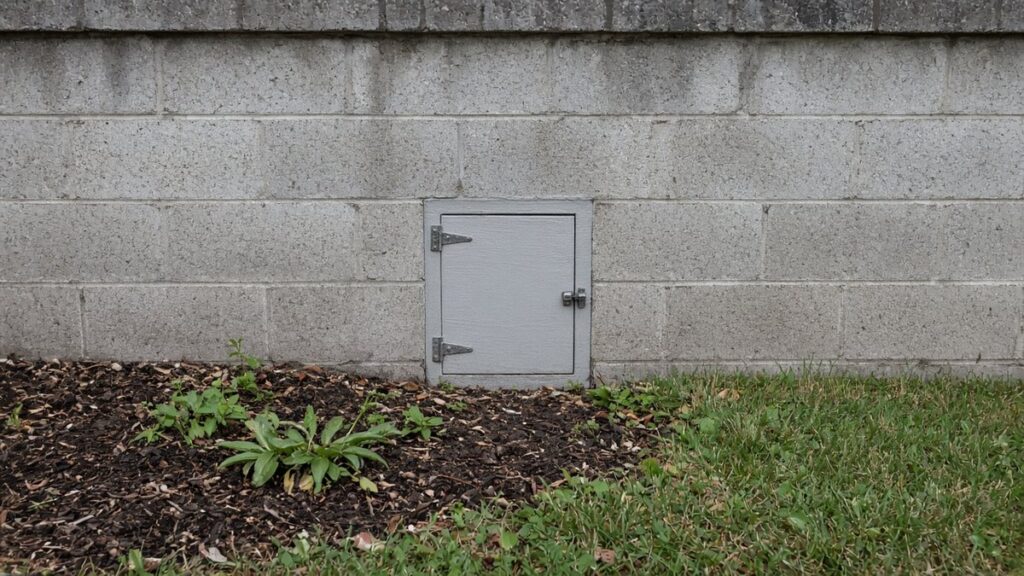
- Ignoring the access door and rim joists. Gaps let in cold air, moisture and pests.
- Never looking inside. Many crawl space problems go unnoticed for years.
Summer basement checklist for Brook Park
July heat and humidity can make a basement feel damp even when it isn’t leaking.
- Run a dehumidifier and keep humidity moderate.
- Check after thunderstorms for new water.
- Look at landscaping that may trap water by the walls.
- Inspect the crawl space for moisture and pests.
- Plan projects while the weather is good.
What a good assessment should include
Whoever you hire, a good evaluation should:
- Look outside at gutters, downspouts, grading and window wells
- Look inside at walls, floors, cracks and the sump system
- Explain the cause, not just the symptom
- Lay out options, including simple fixes you can do yourself
- Give a written estimate before any work starts
At Secure Basement Solutions, we keep it no-pressure and education-first. You should understand the problem before you decide anything.
How it all connects
Water and soil pressure are linked. Wet soil freezes, swells and pushes on walls. That’s why wet basements MN homeowners see often come with cracks, and why basement waterproofing MN and foundation repair MN work is often planned together. Read about our basement waterproofing and foundation repair services. For more on torn vapor barrier and related work, see our crawl space repair page.
Trusted resources
University of Minnesota Extension covers moisture in basements, including crawl spaces.
Serving Brook Park and Pine County
Brook Park is a small Pine County community with mostly rural homes and wooded lots. We’re a veteran-owned, locally owned company based in Mora with more than 30 years of trade experience. Our service area includes Brook Park, Pine County and communities across Minnesota, and we always start with education, not pressure. Call us with questions about torn vapor barrier any time.
Frequently asked questions
Can I patch a vapor barrier myself?
Small tears, yes. Large damage often calls for replacement.
Does a torn barrier cause mold?
It can add moisture that feeds mold.
Can crawl space moisture affect my health?
Moisture can lead to mold, and air from the crawl space moves into the home. See EPA guidance on mold and moisture.
How often should I check my crawl space?
At least twice a year, and after major storms or snowmelt.
Get a clear answer
No pressure, education first.
Questions about torn vapor barrier? We’re available 24/7. Call 320-280-3522 or Request an Estimate.