
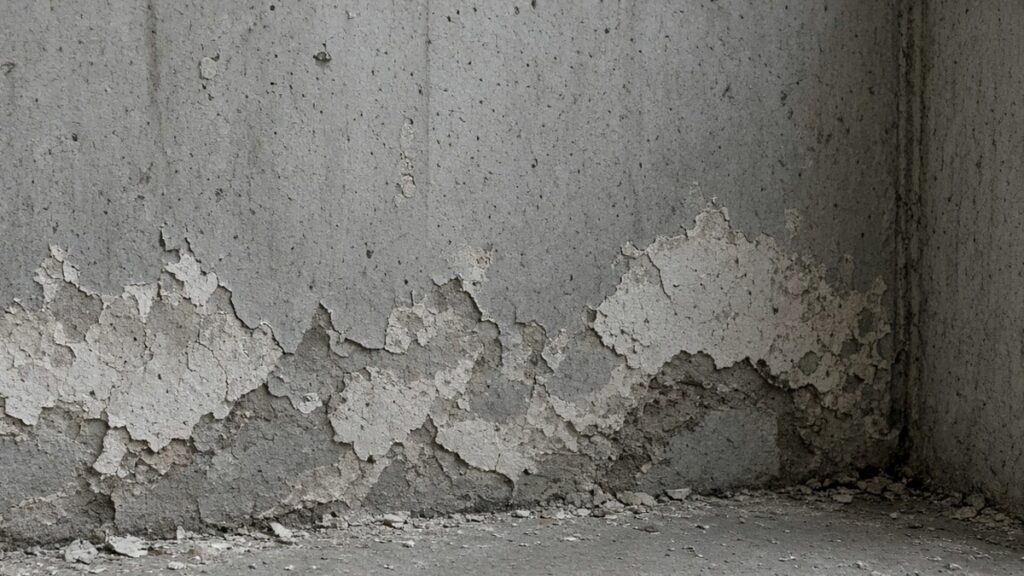
Flaking, chipping or pitted concrete on a basement wall is called spalling. Spalling concrete basement walls usually point to a moisture problem. This guide is written for homeowners in Hastings, Dakota County and across Minnesota.
Table of Contents
What spalling looks like
- Flakes or chips falling off the surface
- Pitted or rough patches
- White powder called efflorescence nearby
- Exposed stone in the concrete mix
Why it happens
Water moves through concrete and carries salts with it. When it dries, those salts crystallize and push the surface apart. Above ground, water in the concrete can freeze and pop off pieces.
Where you’ll see it
- Lower walls where moisture is highest
- Areas behind stored boxes or furniture
- Above ground on the outside of the wall
- Near window wells and leaking cracks
Is it serious?
Light spalling is mostly surface damage. Deep spalling, crumbling, or exposed rebar is more serious and needs a pro to look.
Fixing spalling concrete basement walls
- Find and fix the water source. Check grading, gutters, cracks and drain tile.
- Clean off loose concrete.
- Patch with a repair mortar.
- Avoid sealing over a wet wall, since paint and coatings will peel.
Fall timing
Fixing the water source before winter helps stop more freeze damage.
Dealing with spalling concrete basement walls? We’re available 24/7. Call 320-280-3522 or Request an Estimate.
Warning signs to watch for
- Efflorescence (white residue) along the crack
- Cracks wider than a credit card
- Cracks that grow between checks
- Horizontal or stair-step patterns
- Displacement, where one side sticks out past the other
Where basement wall cracks come from
Basement walls crack for a few main reasons:
- Shrinkage during curing (usually thin and vertical)
- Settlement (often diagonal, wider at one end)
- Pressure from soil and frost (often horizontal)
- Frost that widens existing cracks each winter
Each type tells a different story, so look closely before choosing a fix.
How wall cracks are typically repaired
Common professional approaches include:
- Polyurethane injection: flexible foam that expands to fill a leaking crack.
- Epoxy injection: a rigid material used on certain cracks to bond concrete.
- Drainage: relieving the water pressure that pushes water through cracks.
- Structural repair: if the wall is moving, the movement must be addressed first. See foundation repair.
Surface patches from a tube often fail because water keeps pushing from behind.
Common mistakes to avoid
- Not marking the crack. Without dated marks it’s hard to tell if a crack is growing.
- Treating every crack the same. Horizontal and stair-step cracks need a different look than small vertical ones.
- Ignoring water outside. Downspouts and grading affect how much water reaches the crack.
Summer basement checklist for Hastings
Early summer brings heavy storms and rising basement humidity.
- Run a dehumidifier and keep humidity moderate.
- Check after thunderstorms for new water.
- Look at landscaping that may trap water by the walls.
- Inspect the crawl space for moisture and pests.
- Plan projects while the weather is good.
What a good assessment should include
Whoever you hire, a good evaluation should:
- Look outside at gutters, downspouts, grading and window wells
- Look inside at walls, floors, cracks and the sump system
- Explain the cause, not just the symptom
- Lay out options, including simple fixes you can do yourself
- Give a written estimate before any work starts
At Secure Basement Solutions, we keep it no-pressure and education-first. You should understand the problem before you decide anything.
How it all connects
Here’s the simple version. Wet basements MN families notice are usually a water problem first. Basement waterproofing handles that water. If walls have cracked or shifted, foundation repair comes in. Many homes need a little of both, so good basement waterproofing MN and foundation repair MN advice looks at the whole picture. For more on spalling concrete basement walls and related work, see our wall crack repair page.
Trusted resources
University of Minnesota Extension explains how water reaches basement walls in its guide to moisture in basements.
Serving Hastings and Dakota County
Hastings is the Dakota County seat on the Mississippi River, with many historic homes. From our home base in Mora, our veteran-owned team serves Hastings, Dakota County and communities across Minnesota. We bring more than 30 years of trade experience and an education-first approach. If spalling concrete basement walls is on your list, we’re happy to help.
Frequently asked questions
Is spalling the same as efflorescence?
No. Efflorescence is the white powder; spalling is the surface breaking off.
Can I paint over spalling?
Not until the moisture is fixed.
What’s the difference between polyurethane and epoxy?
Polyurethane stays flexible and is common for leaks. Epoxy is rigid and is used where bonding the concrete matters.
Can I seal a basement crack myself?
Surface products may slow a small leak, but injection fills the crack through the wall and usually lasts longer.
We’re here when you need us
No pressure, education first.
Day or night, 24/7: call 320-280-3522 or Request an Estimate. We’ll help with spalling concrete basement walls in Hastings and nearby towns.