
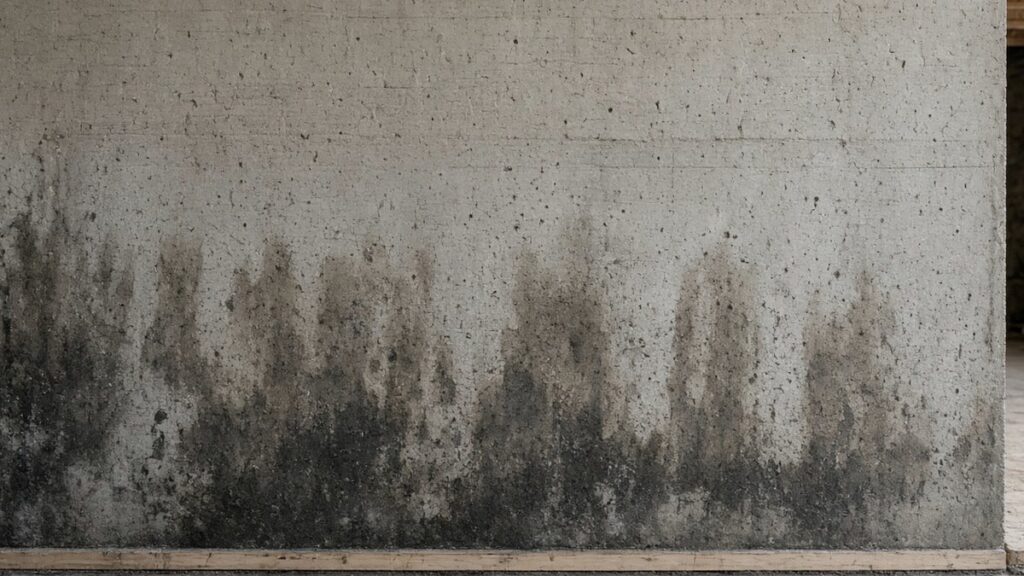
Orange or brown streaks coming from a crack can be a clue. Rust stained foundation cracks can mean water is reaching metal in or near the wall. This guide is written for homeowners in Spring Lake Park, Anoka County and across Minnesota.
Table of Contents
Common causes
- Tie rods or wall ties rusting
- Rebar in the concrete
- Iron in groundwater
Why it matters
Rusting steel expands. That can widen cracks and break concrete.
What to do
- Seal leaking cracks.
- Check for movement.
- Have wide or growing cracks looked at.
Tie rods in poured walls
Poured walls are built with metal ties that hold the forms in place. The ends are snapped off at the wall face. If water reaches them, they rust and leave streaks. Rust stained foundation cracks near tie rod holes often point to that.
Rebar and wall reinforcement
Some walls have steel bars inside. If water reaches rebar through a crack, it can rust. Rust takes up more space than steel, so it can push concrete apart and widen the crack.
Track the stain and the crack
Take a photo and mark the crack ends with a date. Note whether the stain grows after rain.
Questions about rust stained foundation cracks? We’re available 24/7. Call 320-280-3522 or Request an Estimate.
Warning signs to watch for
- Horizontal or stair-step patterns
- Displacement, where one side sticks out past the other
- Water or damp marks around a crack after rain or melt
- Efflorescence (white residue) along the crack
- Cracks wider than a credit card
Why basement walls crack in Minnesota
Cracks are common in Minnesota foundations because of:
- Concrete shrinkage as walls cure
- Freeze-thaw cycles that widen tiny gaps every winter
- Soil pressure from wet or frozen ground
- Settlement where soil under footings compresses
Most cracks start small. Water is what turns a small crack into a real problem.
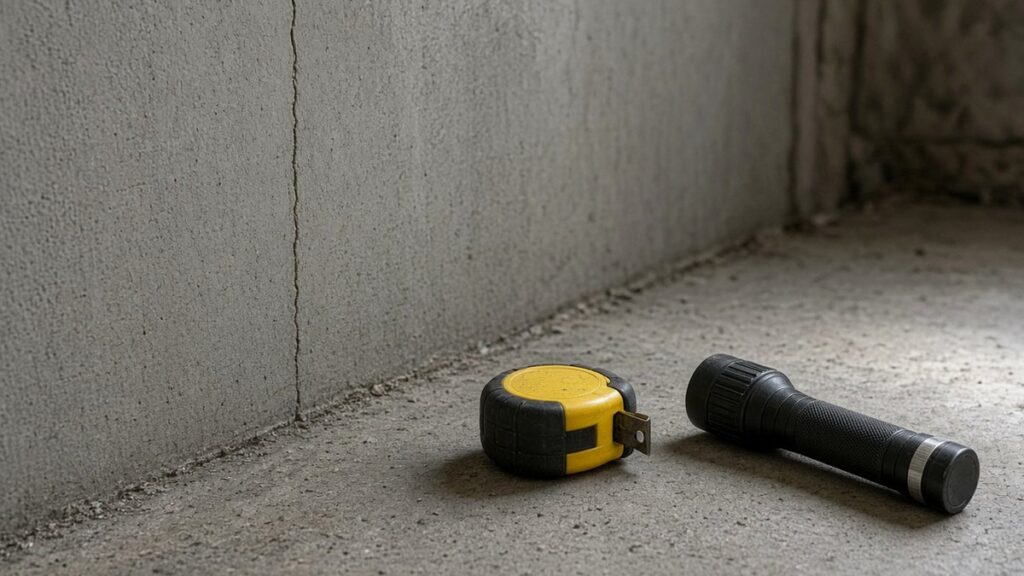
How wall cracks are typically repaired
Common professional approaches include:
- Polyurethane injection: flexible foam that expands to fill a leaking crack.
- Epoxy injection: a rigid material used on certain cracks to bond concrete.
- Drainage: relieving the water pressure that pushes water through cracks.
- Structural repair: if the wall is moving, the movement must be addressed first. See foundation repair.
Surface patches from a tube often fail because water keeps pushing from behind.
Common mistakes to avoid
- Surface patching a leaking crack. Caulk or patch on the face of the wall often fails under water pressure.
- Not marking the crack. Without dated marks it’s hard to tell if a crack is growing.
- Treating every crack the same. Horizontal and stair-step cracks need a different look than small vertical ones.
Quick spring to-do list for Spring Lake Park
March is melt season, when snow turns to water and the ground is still frozen below.
- Clear snow and ice from around downspout outlets.
- Look for water lines or damp spots along the floor edge.
- Pour a bucket of water in the sump pit to test it.
- Watch cracks after rain and note any changes.
- Fill low spots in the yard once the ground thaws.
What a good assessment should include
Whoever you hire, a good evaluation should:
- Look outside at gutters, downspouts, grading and window wells
- Look inside at walls, floors, cracks and the sump system
- Explain the cause, not just the symptom
- Lay out options, including simple fixes you can do yourself
- Give a written estimate before any work starts
At Secure Basement Solutions, we keep it no-pressure and education-first. You should understand the problem before you decide anything.
How it all connects
Most wet basements MN homeowners deal with come from more than one cause. Water, frost and soil pressure work together. That’s why basement waterproofing and foundation repair often go hand in hand. Good basement waterproofing MN work controls water, and good foundation repair MN work keeps walls stable. For more on rust stained foundation cracks and related work, see our wall crack repair page.
Trusted resources
University of Minnesota Extension explains how water reaches basement walls in its guide to moisture in basements.
Serving Spring Lake Park and Anoka County
Spring Lake Park is a compact Anoka County suburb with many homes from the 1950s through the 1970s. From our home base in Mora, our veteran-owned team serves Spring Lake Park, Anoka County and communities across Minnesota. We bring more than 30 years of trade experience and an education-first approach. Call us with questions about rust stained foundation cracks any time.
Frequently asked questions
Is rust staining serious?
It depends on the source.
Can it be cleaned?
Yes, but fix the leak first.
Should I repair a crack before finishing my basement?
Yes. It’s much easier to fix cracks before walls are covered.
What’s the difference between polyurethane and epoxy?
Polyurethane stays flexible and is common for leaks. Epoxy is rigid and is used where bonding the concrete matters.
Ready for a dry basement?
No pressure, education first.
Questions about rust stained foundation cracks? We’re available 24/7. Call 320-280-3522 or Request an Estimate.