
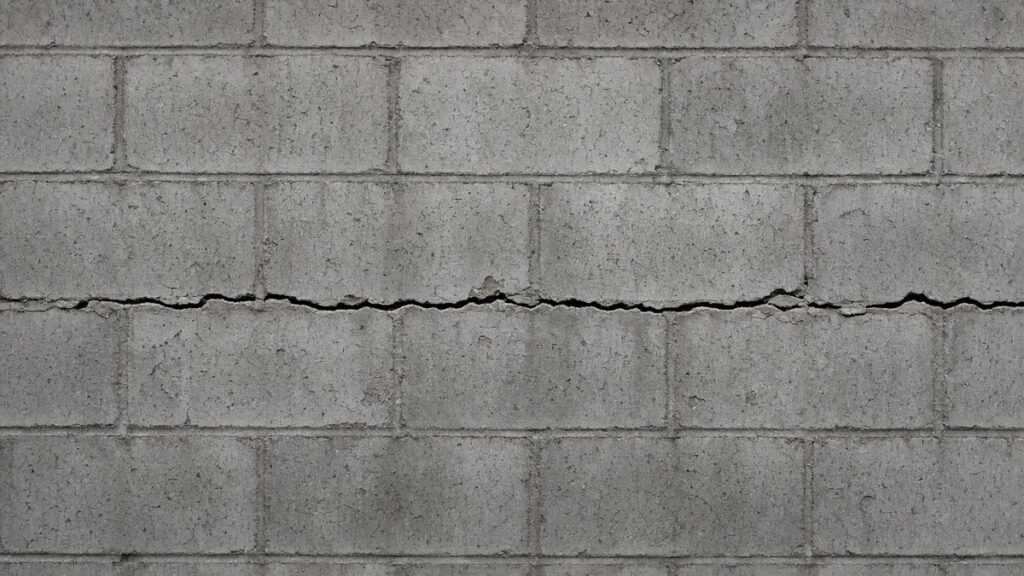
Most small basement cracks are cosmetic. A horizontal crack is different. It runs sideways across the wall, and it often means the soil outside is pushing in. For homeowners in Cambridge and across Isanti County, it’s a sign worth taking seriously. Here’s what a horizontal crack in basement wall concrete or block can mean.
Here’s how to read a horizontal crack, what to document, and when to call for foundation repair MN help. None of this replaces an on-site look at a horizontal crack in basement wall, but it gives you a head start.
Table of Contents
Why horizontal cracks matter
Vertical cracks usually come from concrete shrinking as it cures. Horizontal cracks are usually caused by pressure from outside. Older and newer homes alike can benefit from a closer look at a horizontal crack in basement wall.
Three forces drive that pressure in Minnesota:
- Saturated soil. Wet soil is heavy. After long rains it presses hard on basement walls.
- Frost. When wet soil freezes, it expands and pushes sideways against the wall.
- Expansive clay. Clay swells when wet and shrinks when dry, flexing the wall over and over.
Concrete is strong when squeezed but weak when bent. Push the middle of a wall inward and it cracks along a horizontal line. A little background on a horizontal crack in basement wall makes the rest of this guide easier to follow.
Block walls vs. poured walls
Concrete block walls
Block walls often crack along a mortar joint about halfway up or just below the frost line. You may see a “stair-step” crack at the corners too. Block walls can bow inward more easily than poured walls. The sections below break a horizontal crack in basement wall into plain, practical steps.
Poured concrete walls
Poured walls are stiffer. A horizontal crack in a poured wall still points to pressure and should be checked.
Warning signs that need attention soon
Call for a foundation assessment if you notice:
- A crack wider than about 1/4 inch
- The wall bowing or leaning inward (hold a long level against it)
- The top of the wall shifting past the bottom
- Water coming through the crack
- The crack growing over weeks or months
- Doors or windows upstairs starting to stick
Worried about a crack? We’re available 24/7. Call 320-280-3522 or Request an Estimate.
How to document a horizontal crack
Good notes help any contractor give you accurate advice.
- Photograph the full wall and close-ups of the crack.
- Measure the width in a few spots. Write it on painter’s tape next to the crack with the date.
- Check for bowing with a 4-foot level or a string pulled tight from corner to corner.
- Note water. Does it leak after rain or snowmelt?
- Re-check monthly, especially in spring and late fall.
Why water and cracks go together
A horizontal crack is often a symptom of too much water in the soil. That’s why wet basements MN homeowners deal with and wall cracks often show up together. Every home is a little different, so a horizontal crack in basement wall is best judged on site.
Repairing the crack alone may not be enough. Long-term fixes usually combine:
- Reducing water against the wall: downspouts, grading and basement waterproofing MN drainage
- Repairing the crack: see our wall crack repair service
- Stabilizing the wall if it has moved: see foundation repair
General repair approaches
Every wall is different, and only an on-site assessment sets the right scope. Common approaches include:
- Sealing non-structural cracks that leak
- Wall bracing or reinforcement to stop further inward movement
- Drainage improvements to lower the pressure that caused the crack
We don’t guess at a fix from a photo. We look at the wall, the soil, the drainage and how the crack has changed.
Local context for Cambridge homeowners
Cambridge sits along the Rum River, and soil conditions vary a lot across Isanti County. Some lots drain quickly; others hold water near the surface. Homes of every age here, from older block foundations to newer poured walls, can develop horizontal cracks.
Secure Basement Solutions is veteran-owned and based in nearby Mora, with more than 30 years of trade experience. We serve Cambridge, Isanti County and communities throughout east-central Minnesota and the Twin Cities. That context matters when you look at a horizontal crack in basement wall in your own basement.
For background on how moisture affects homes, see University of Minnesota Extension’s guide to moisture in basements. With that in mind, a horizontal crack in basement wall becomes much easier to plan around.
Your fall basement checklist
- Service the sump pump and protect the discharge line.
- Fix grading before the ground freezes.
- Walk around your Cambridge home after the next big storm or melt.
- Clean gutters after the leaves drop.
- Seal leaking cracks before winter.
- Add window well covers before snow.
What a good assessment should include
Whichever company you call, a thorough evaluation should:
- Give a written estimate before any work starts
- Fit the advice to your Cambridge home, not a one-size-fits-all plan
- Look outside at gutters, downspouts, grading and window wells
- Explain the cause, not just the symptom
- Lay out options, including simple fixes you can do yourself
- Look inside at walls, floors, cracks and the sump system
We keep every visit no-pressure and focused on education. The goal is for you to understand what’s happening before you choose anything.
Horizontal crack in basement wall: frequently asked questions
Is every horizontal crack an emergency?
Not always. A thin crack that hasn’t changed in years may just need monitoring. A wide, growing or bowing crack should be looked at soon. Notes and dated photos make a horizontal crack in basement wall much easier to talk through with a contractor.
Can I fill a horizontal crack with caulk?
Caulk may stop a little water for a while, but it does nothing for the pressure pushing the wall. It can also hide movement you need to see.
Will it get worse in winter?
It can. Frost in wet soil adds pressure. Late fall is a good time to have it checked.
Can I seal a basement crack myself?
Surface products may slow a small leak, but injection fills the crack through the wall and generally lasts longer. The same idea applies to most homes in Isanti County. Questions about a horizontal crack in basement wall come up often in Cambridge and nearby towns.
Do all cracks leak?
No. Many stay dry. Watch them after heavy rain and snowmelt. It’s a good rule of thumb for Cambridge-area houses.
Talk to someone who will explain it straight
No pressure, education first. Tell us about the crack and send a few photos.
Need help in Cambridge? We’re available 24/7. Call 320-280-3522 or Request an Estimate and tell us what you’re seeing.