
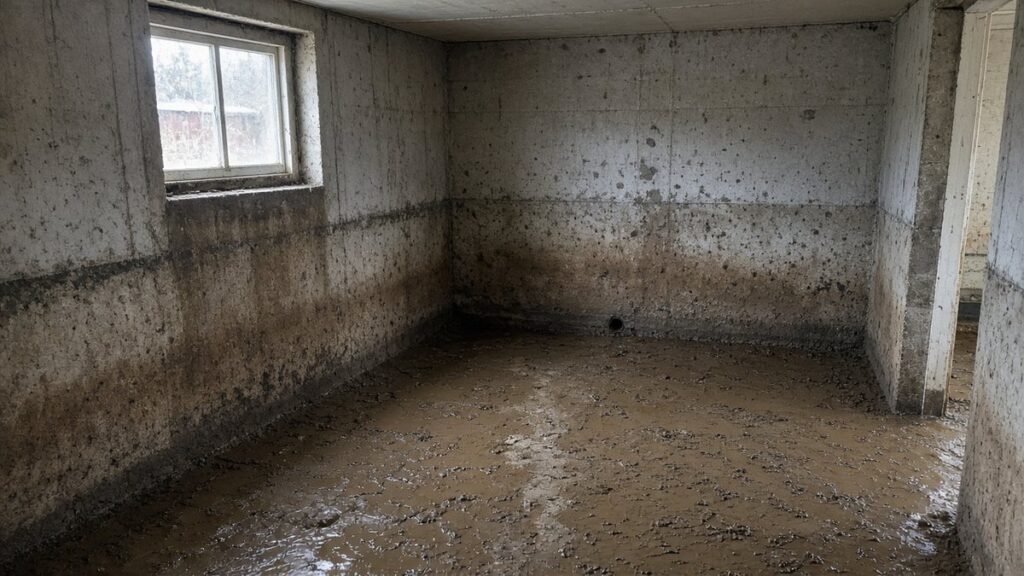
Floodwater can do more than soak belongings. A foundation inspection after a flood looks for cracks, movement and soil washed away from footings. Here’s what homeowners in Blaine, Anoka County and across Minnesota should know.
Table of Contents
What to look for
- New cracks or wider old ones
- Bowing walls from saturated soil
- Washed-out soil around the foundation
- Settling of stoops, steps or slabs
Why Minnesota foundations move
Foundations in Minnesota deal with forces many other states don’t:
- Frost heave: water in soil freezes, expands and pushes on footings and walls.
- Saturated soil in spring adds weight and pressure against basement walls.
- Clay soils swell when wet and shrink when dry, so walls get squeezed and released.
- Poor drainage keeps soil wet right next to the foundation.
Over years, these forces can crack, bow or shift foundation walls. With that in mind, a foundation inspection after a flood becomes much easier to plan around.
Steps
- Stay safe: wait until power and water are safe.
- Document with dated photos.
- Dry the space before judging cracks.
- Get an assessment of anything new.
Don’t rush repairs
Let the area dry and get a clear picture before making decisions. Minnesota’s climate is a big part of why a foundation inspection after a flood matters here.
Concerned after a flood? We’re available 24/7. Call 320-280-3522 or Request an Estimate.
Foundation inspection after a flood: warning signs to watch for
- Horizontal cracks in block or poured walls
- Stair-step cracks in block mortar joints
- Walls that bow, lean or bulge inward
- Cracks that widen over months
- Sticking doors and windows upstairs
- Gaps around window frames or between walls and ceilings
Common foundation repair approaches
The right approach depends on what’s moving and why. Common methods include:
- Wall anchors: plates on the inside wall connected to anchors in the yard, used to stabilize bowing walls.
- Wall braces or beams: steel supports that brace a wall from footing to floor joists.
- Crack repair: sealing cracks after the cause has been addressed.
- Drainage improvements: reducing the water and frost pressure that caused movement in the first place.
- Excavation and rebuild: for severe damage, part of a wall may need to be rebuilt.
Any structural concern should be evaluated in person. Photos help, but they can’t replace an on-site look. Keep that in mind as you think through a foundation inspection after a flood.
Your fall basement checklist
- Clean gutters after the leaves drop.
- Fix grading before the ground freezes.
- Service the sump pump and protect the discharge line.
- Seal leaking cracks before winter.
- Add window well covers before snow.
Common mistakes with a foundation inspection after a flood
- Filling a structural crack and forgetting it. A cosmetic patch can hide movement that’s still happening.
- Skipping documentation. Without dated photos and measurements, it’s hard to tell if a crack is changing.
- Ignoring drainage. Wet, frozen soil adds pressure on walls, so water control is part of most foundation repair MN plans.
- Choosing a fix before knowing the cause. The right repair depends on why the wall or slab moved.
What a good assessment should include
Whoever you hire, a good evaluation should:
- Look outside at gutters, downspouts, grading and window wells
- Look inside at walls, floors, cracks and the sump system
- Explain the cause, not just the symptom
- Lay out options, including simple fixes you can do yourself
- Give a written estimate before any work starts
At Secure Basement Solutions, we keep it no-pressure and education-first. You should understand the problem before you decide anything.
Questions to ask before you hire anyone
Before you pick a contractor, ask:
- What’s causing the problem?
- What are my options, and what are the trade-offs?
- Is there anything I can do myself first?
- What’s included in the estimate?
- Is a warranty offered, and what does it cover?
You can also check contractor licensing through the Minnesota Department of Labor and Industry. A good contractor will answer clearly and won’t rush you. A little background on a foundation inspection after a flood makes these steps easier to follow.
How it all connects
Wet basements MN homeowners deal with rarely have just one cause. Water, soil pressure and frost are linked. That’s why basement waterproofing and foundation repair often go hand in hand. Good basement waterproofing MN work manages water, and good foundation repair MN work keeps walls stable. Fixing the cause protects both. Learn more about our foundation repair service, or read about basement waterproofing in Minnesota.
Your next steps with a foundation inspection after a flood
- Write down what you see: where, when and how much water or movement.
- Take dated photos so changes are easy to compare.
- Handle the simple items like gutters, downspouts and clearing debris.
- Get a professional opinion if the problem returns, grows or affects safety.
Homeowners in Blaine and nearby communities can reach Secure Basement Solutions any time at 320-280-3522.
Trusted resources
Ready.gov covers after-flood safety.
University of Minnesota Extension explains how water around foundations contributes to problems in its guide to moisture in basements. Here’s what Blaine homeowners should know about a foundation inspection after a flood.
Serving Blaine and Anoka County
Blaine is one of Anoka County’s larger cities, with many wetlands mixed among its neighborhoods. Secure Basement Solutions is veteran-owned and based in Mora, with more than 30 years of trade experience. We serve Blaine, Anoka County and communities across Minnesota. No pressure, education first.
Foundation inspection after a flood: frequently asked questions
Can floods damage foundations?
Saturated soil and erosion can.
When should I inspect?
Once it’s safe.
Will foundation repair stop my basement from leaking?
Not always. Structural repair and waterproofing solve different problems, though they’re often planned together.
How do I track whether a crack is growing?
Mark the ends with a pencil, write the date, measure the width and take photos from the same spot every month or two.
Check your foundation after the water
Available 24/7. Call 320-280-3522 or Request an Estimate.