
Many basements rely on pipes you’ll never see. Footing drains sit at the base of the foundation and quietly carry water away. When they fail, the basement often lets you know. This guide is written for homeowners in Braham, Isanti County and across Minnesota.
Table of Contents
What footing drains are
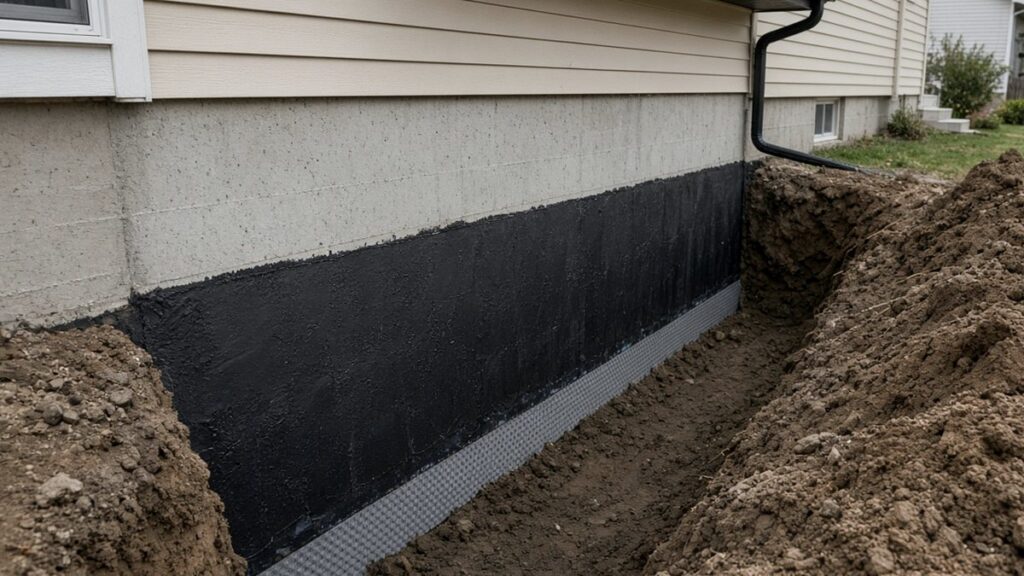
Footing drains are perforated pipes laid next to the footing, usually on the outside of the foundation. They’re bedded in gravel so water can reach them. They carry water to a sump pit, a storm sewer where allowed, or a low spot in the yard.
How to tell if you have them
- A sump pit with pipes coming into the sides
- A drain that daylights in a low part of the yard
- Building records for newer homes
- Older homes may have clay tile or no drains at all
Signs footing drains are failing
- Water at the floor edge after rain or melt
- A sump pit that stays dry during storms
- Damp lower walls that used to be dry
- Sediment or orange sludge in the pit
Why they fail
- Silt fills the pipe or gravel
- Crushed or broken sections
- Roots in older clay tile
- Iron bacteria clogging the holes
- Outlets that get buried or blocked
Options when they fail
- Cleaning or jetting through a cleanout
- Camera inspection to find problems
- Replacing exterior drains with a dig
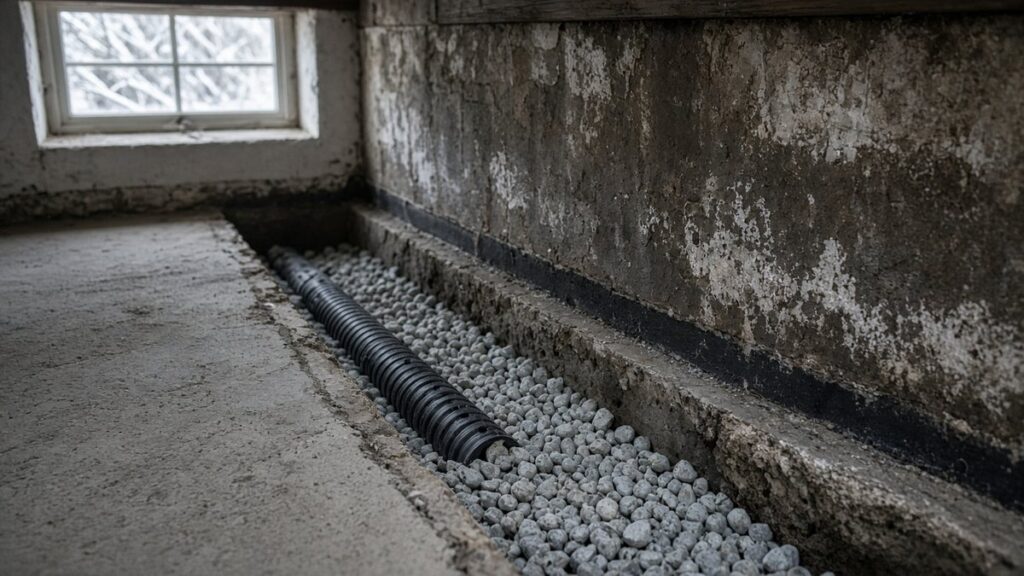
- Adding interior drain tile to take over the job
Keep water away from them
Good grading and downspout extensions mean less water reaches the footing drains, so they last longer.
Dealing with footing drains? We’re available 24/7. Call 320-280-3522 or Request an Estimate.
The Minnesota factors behind wet basements
Most basement water problems in Minnesota come back to the same handful of causes:
- Saturated soil after snowmelt or long rains
- Hydrostatic pressure pushing water through any weak spot
- Roof water dumped too close to the foundation
- Settled backfill that slopes toward the house
- Aging drain tile that clogs with silt over time
Knowing the cause matters, because the right fix depends on where the water starts.
How professionals typically handle it
There’s no one-size-fits-all fix. Common basement waterproofing approaches include:
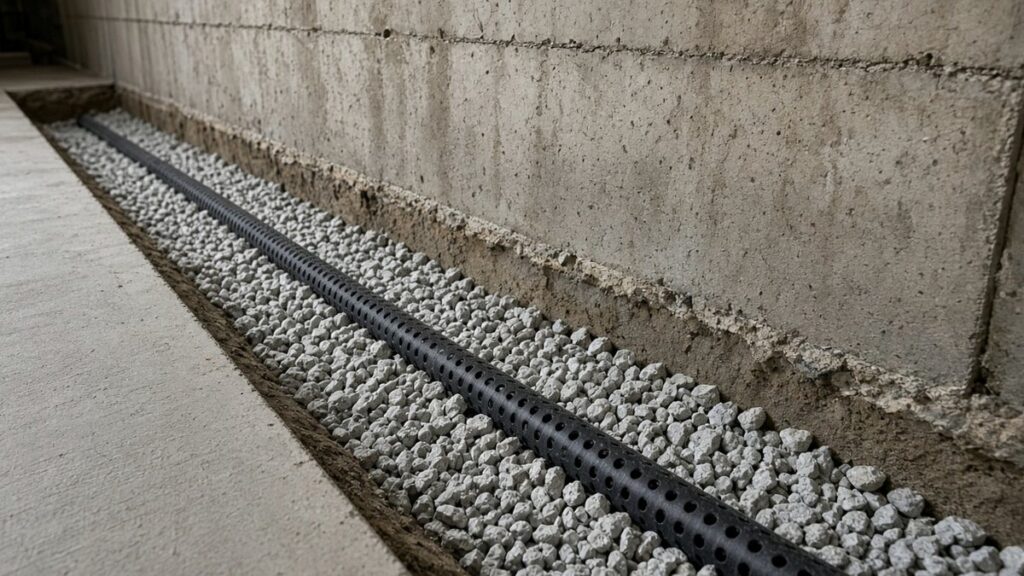
- Interior drain tile: a perforated pipe installed along the inside perimeter of the footing that collects water and sends it to a sump pit.
- Sump pump systems: pump collected water out and away from the house.
- Crack repair: injection products seal specific leaking cracks.
- Exterior drainage corrections: grading, downspout extensions and window well drains reduce how much water reaches the walls.
- Humidity control: dehumidifiers manage moisture that isn’t a true leak.
A good assessment looks at the whole picture, inside and out, before recommending anything.
Common mistakes to avoid
- Waiting for the next storm. Small seepage tends to grow with each wet season.
- Patching only the symptom. Sealing a damp spot without finding where the water comes from usually means it shows up somewhere else.
- Ignoring the outside. Gutters, downspouts and grading cause many wet basements MN homeowners deal with.
Quick winter to-do list for Braham
January cold keeps the ground frozen, but thaws and snow piles can still push water toward a basement.
- Walk the basement after every thaw.
- Keep downspouts clear of ice so meltwater can drain.
- Make sure the sump pit isn’t freezing or running nonstop.
- Note any damp spots with a date and photo.
- Plan spring projects now so you’re not waiting later.
What a good assessment should include
Whoever you hire, a good evaluation should:
- Look outside at gutters, downspouts, grading and window wells
- Look inside at walls, floors, cracks and the sump system
- Explain the cause, not just the symptom
- Lay out options, including simple fixes you can do yourself
- Give a written estimate before any work starts
At Secure Basement Solutions, we keep it no-pressure and education-first. You should understand the problem before you decide anything.
How it all connects
Water and soil pressure are linked. Wet soil freezes, swells and pushes on walls. That’s why wet basements MN homeowners see often come with cracks, and why basement waterproofing MN and foundation repair MN work is often planned together. Read about our basement waterproofing and foundation repair services. For more on footing drains and related work, see our basement waterproofing page.
Trusted resources
University of Minnesota Extension explains common causes in its guide to moisture in basements.
Serving Braham and Isanti County
Braham sits along the Isanti and Kanabec county line, with older in-town homes and newer rural builds. From our home base in Mora, our veteran-owned team serves Braham, Isanti County and communities across Minnesota. We bring more than 30 years of trade experience and an education-first approach. We can help with footing drains and any other basement questions you have.
Frequently asked questions
How long do footing drains last?
It depends on the soil, the pipe and how much silt reaches them.
Can footing drains be cleaned?
Often, if there’s access through a cleanout or the sump pit.
Will a waterproof paint stop my basement leak?
Coatings can help with minor dampness, but they usually can’t hold back water under pressure. Leaks from saturated soil normally need drainage.
Is basement waterproofing worth it if I don’t plan to finish the basement?
Yes. Water damages stored items, raises humidity in the whole house and can encourage mold, finished or not.
Talk it through with us
No pressure, education first.
Available 24/7. Call 320-280-3522 or Request an Estimate to talk about footing drains at your Braham home.