
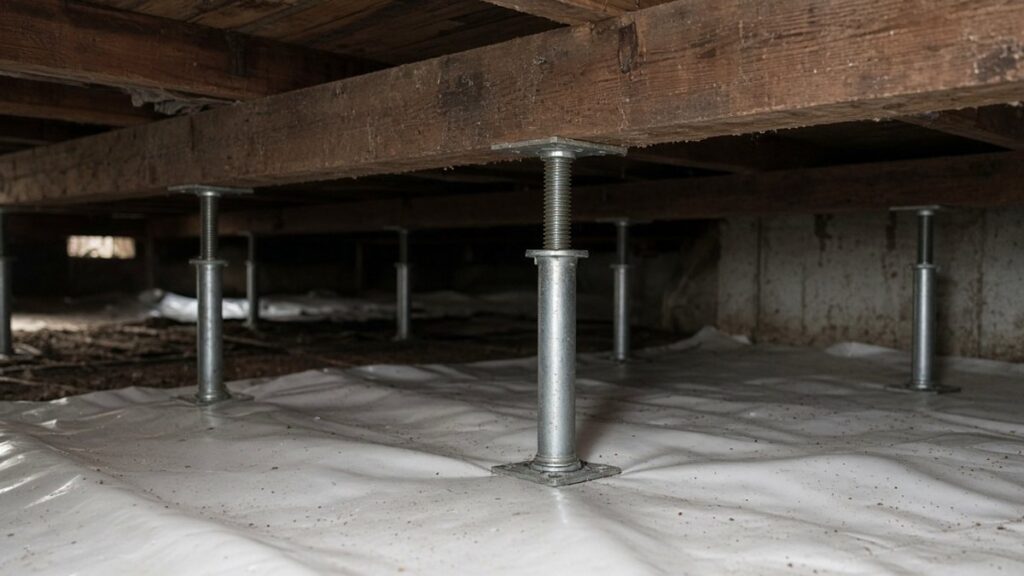
Bouncy or sagging floors over a crawl space are common in older Minnesota homes. Crawl space support jacks can add support under beams and joists so the floor above feels solid again. This guide is written for homeowners in Lakeville, Dakota County and across Minnesota.
Table of Contents
Signs your floor may need more support
- Bouncy or soft spots when you walk
- Floors that slope toward the middle of the house
- Doors and windows that stick or won’t latch
- Cracks in drywall or plaster above doors
- Gaps between baseboards and the floor
Why crawl space floors sag
- Supports set too far apart when the home was built
- Wood posts or blocks that rotted over time
- Soil under supports that softened or settled
- Moisture that weakened beams and joists
- Added weight from remodels, like tile or heavy appliances
How crawl space support jacks work
Adjustable steel jacks sit on a solid base and push up under a beam. They’re tightened in small steps to support the floor. Some are added between existing supports to shorten the span.
A solid base matters
A jack is only as good as what it sits on. Each one needs a proper footing or pad that won’t sink into wet soil. Setting jacks on loose blocks or bare dirt can lead to more settling.
Moisture comes first
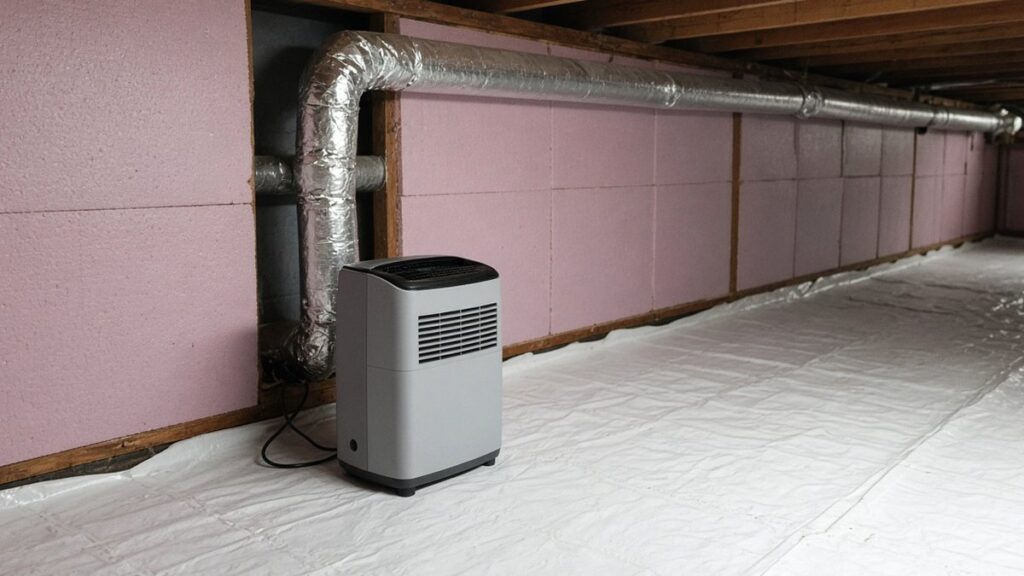
If the crawl space is damp, wood can keep weakening and soil can keep softening. A vapor barrier, drainage fixes and sometimes a dehumidifier help protect the new supports.
Go slow
Lifting a floor too fast can crack drywall, tile and plaster above. Good work raises it a little at a time. Sometimes the goal is to stop more sagging, not to make it perfectly level.
Why fall is a good time
Fall weather is mild, and a crawl space check before winter can catch moisture and support problems early.
Need help with crawl space support jacks? We’re available 24/7. Call 320-280-3522 or Request an Estimate.
Why Minnesota crawl spaces get wet
Crawl spaces sit right on the soil, so moisture finds them easily:
- Bare dirt floors release water vapor constantly
- Vents let in humid summer air that condenses on cool surfaces
- Poor drainage sends roof and yard water toward the foundation
- Spring melt can push water up through the soil
Moisture in a crawl space doesn’t stay there. Air rises from the crawl space into the living space above.
Common crawl space repair approaches
Depending on what’s found, crawl space work may include:
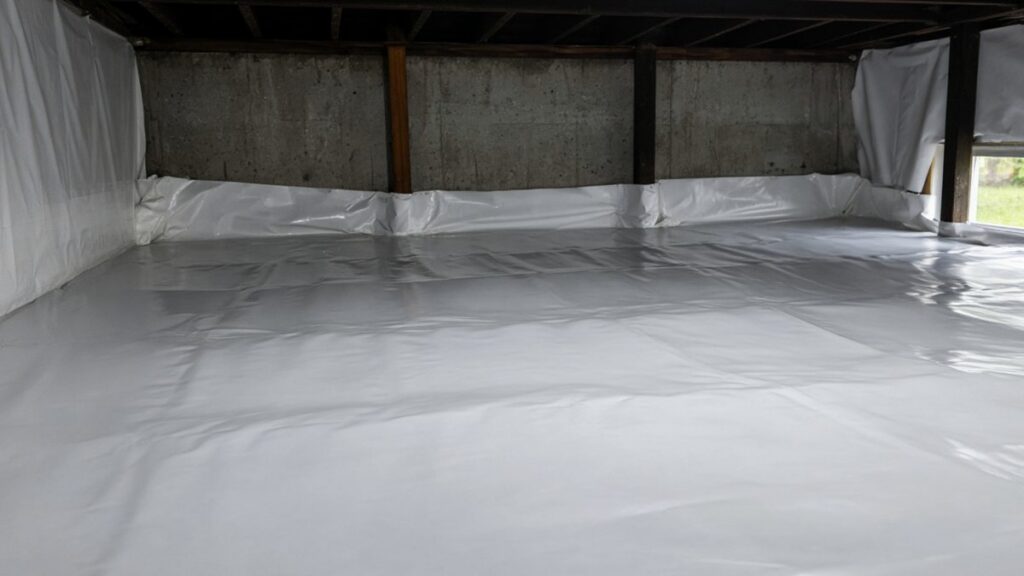
- Vapor barriers: heavy plastic sheeting over the soil to block ground moisture.
- Encapsulation: sealing the floor, walls and vents to create a closed, conditioned space.
- Drainage: directing water to a sump system so it doesn’t pool.
- Dehumidification: controlling humidity once the space is sealed.
- Insulation: on walls or rim joists to reduce cold floors.
Start with an inspection. The right fix depends on where moisture is coming from.
Common mistakes to avoid
- Never looking inside. Many crawl space problems go unnoticed for years.
- Leaving bare soil exposed. Ground moisture rises into the crawl space and the home above.
- Trapping water behind insulation. Insulating before fixing moisture can lead to rot and mold.
Summer basement checklist for Lakeville
Early summer brings heavy storms and rising basement humidity.
- Run a dehumidifier and keep humidity moderate.
- Check after thunderstorms for new water.
- Look at landscaping that may trap water by the walls.
- Inspect the crawl space for moisture and pests.
- Plan projects while the weather is good.
What a good assessment should include
Whoever you hire, a good evaluation should:
- Look outside at gutters, downspouts, grading and window wells
- Look inside at walls, floors, cracks and the sump system
- Explain the cause, not just the symptom
- Lay out options, including simple fixes you can do yourself
- Give a written estimate before any work starts
At Secure Basement Solutions, we keep it no-pressure and education-first. You should understand the problem before you decide anything.
How it all connects
Water and soil pressure are linked. Wet soil freezes, swells and pushes on walls. That’s why wet basements MN homeowners see often come with cracks, and why basement waterproofing MN and foundation repair MN work is often planned together. Read about our basement waterproofing and foundation repair services. For more on crawl space support jacks and related work, see our crawl space repair page.
Trusted resources
University of Minnesota Extension covers moisture in basements, including crawl spaces.
Serving Lakeville and Dakota County
Lakeville has grown quickly, with many newer homes and lakes like Lake Marion. Secure Basement Solutions is veteran-owned and based in Mora, with more than 30 years of trade experience. We serve Lakeville, Dakota County and communities across Minnesota. No pressure, education first. We can help with crawl space support jacks and any other basement questions you have.
Frequently asked questions
Can I install crawl space support jacks myself?
A single jack under a small area may be a DIY job. Larger sags and damaged beams need a pro.
Will my floor end up perfectly level?
Not always. Older framing can take on a set shape over the years.
Should crawl space vents be open or closed?
It depends on the setup. Many sealed crawl spaces close vents, but that should be done as part of a full plan.
Is a vapor barrier enough?
Sometimes. If water pools or humidity stays high, drainage or dehumidification may also be needed.
Ready for a dry basement?
No pressure, education first.
Day or night, 24/7: call 320-280-3522 or Request an Estimate. We’ll help with crawl space support jacks in Lakeville and nearby towns.