
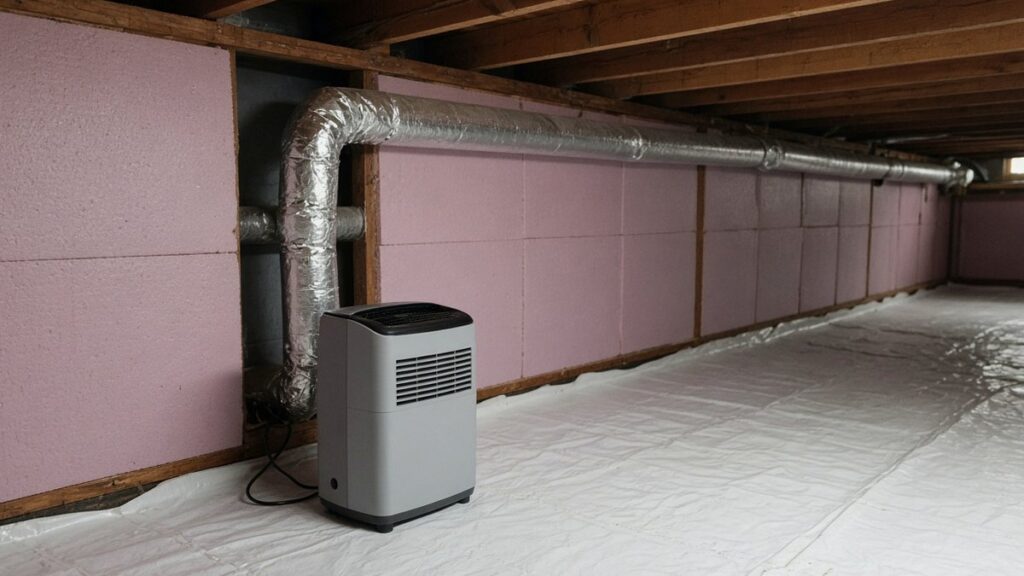
A crawl space can hide problems that are easy to miss on a showing. A crawl space inspection when buying a home helps you know what you’re getting. This guide is written for homeowners in Blaine, Anoka County and across Minnesota.
Table of Contents
What inspectors usually check
- Moisture and standing water
- Vapor barrier condition
- Wood for rot or damage
- Insulation
- Supports and posts
- Pests
Red flags
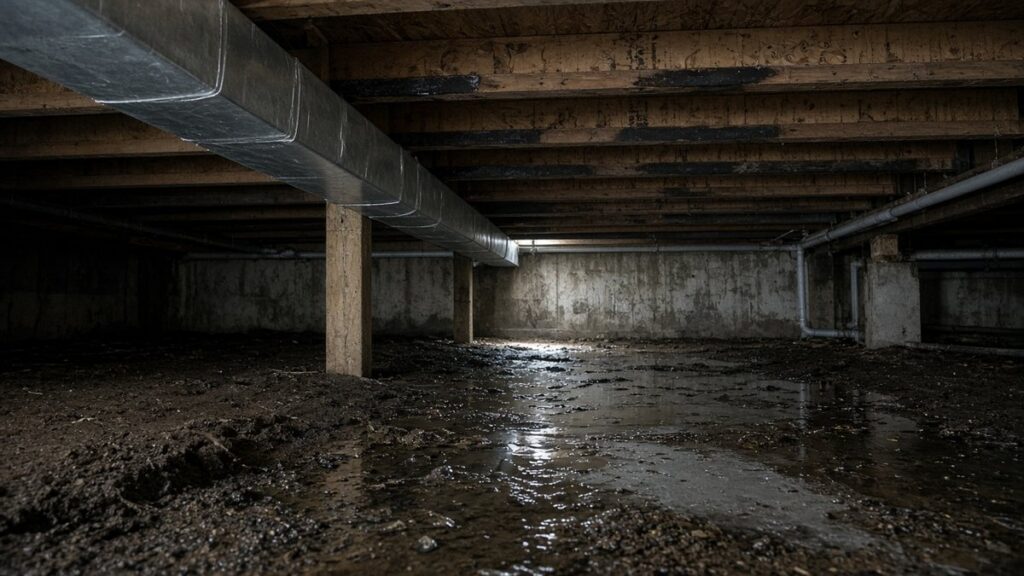
- Standing water
- Mold on joists
- Sagging floors
- Fresh paint or patches that may hide issues
Questions for the seller
- Any past water problems?
- Any repairs done?
- Records or warranties from past work?
Getting more info
If the inspector notes problems, ask a crawl space or foundation pro for a closer look before closing.
Need help with crawl space inspection when buying a home? We’re available 24/7. Call 320-280-3522 or Request an Estimate.
Warning signs to watch for
- Musty smells in rooms above the crawl space
- Cold or damp floors
- Visible mold on joists or insulation
- Sagging or wet insulation
- Standing water or damp soil
Why Minnesota crawl spaces get wet
Crawl spaces sit right on the soil, so moisture finds them easily:
- Bare dirt floors release water vapor constantly
- Vents let in humid summer air that condenses on cool surfaces
- Poor drainage sends roof and yard water toward the foundation
- Spring melt can push water up through the soil
Moisture in a crawl space doesn’t stay there. Air rises from the crawl space into the living space above.
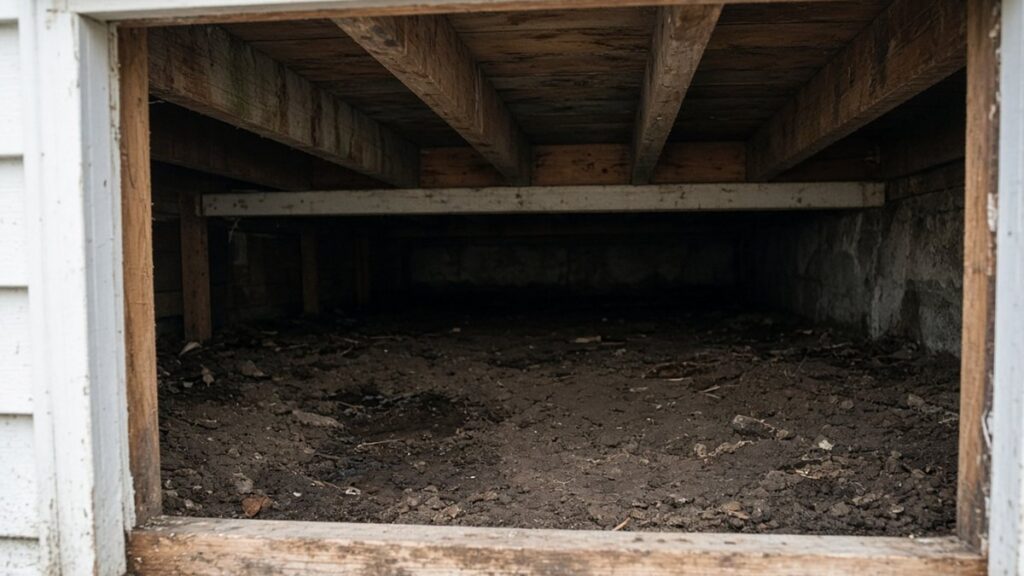
Common crawl space repair approaches
Depending on what’s found, crawl space work may include:
- Vapor barriers: heavy plastic sheeting over the soil to block ground moisture.
- Encapsulation: sealing the floor, walls and vents to create a closed, conditioned space.
- Drainage: directing water to a sump system so it doesn’t pool.
- Dehumidification: controlling humidity once the space is sealed.
- Insulation: on walls or rim joists to reduce cold floors.
Start with an inspection. The right fix depends on where moisture is coming from.
Common mistakes to avoid
- Leaving bare soil exposed. Ground moisture rises into the crawl space and the home above.
- Trapping water behind insulation. Insulating before fixing moisture can lead to rot and mold.
- Ignoring the access door and rim joists. Gaps let in cold air, moisture and pests.
Quick spring to-do list for Blaine
March is melt season, when snow turns to water and the ground is still frozen below.
- Clear snow and ice from around downspout outlets.
- Look for water lines or damp spots along the floor edge.
- Pour a bucket of water in the sump pit to test it.
- Watch cracks after rain and note any changes.
- Fill low spots in the yard once the ground thaws.
Questions to ask before you hire anyone
Before you pick a contractor, ask:
- What’s causing the problem?
- What are my options, and what are the trade-offs?
- Is there anything I can do myself first?
- What’s included in the estimate?
- Is a warranty offered, and what does it cover?
You can also check contractor licensing through the Minnesota Department of Labor and Industry. A good contractor will answer clearly and won’t rush you.
How it all connects
Water is behind most wet basements MN homes see, and it’s also behind a lot of wall movement. Basement waterproofing MN projects manage the water. Foundation repair MN projects deal with walls and floors that have moved. Learn more about basement waterproofing and foundation repair. For more on crawl space inspection when buying a home and related work, see our crawl space repair page.
Trusted resources
University of Minnesota Extension covers moisture in basements, including crawl spaces.
Serving Blaine and Anoka County
Blaine is one of Anoka County’s larger cities, with many wetlands mixed among its neighborhoods. We’re a veteran-owned, locally owned company based in Mora with more than 30 years of trade experience. Our service area includes Blaine, Anoka County and communities across Minnesota, and we always start with education, not pressure. If crawl space inspection when buying a home is on your list, we’re happy to help.
Frequently asked questions
Should I skip a home with crawl space issues?
Not always. Know the fix first.
Can I attend the inspection?
Usually, and it’s a good idea.
Should crawl space vents be open or closed?
It depends on the setup. Many sealed crawl spaces close vents, but that should be done as part of a full plan.
Is a vapor barrier enough?
Sometimes. If water pools or humidity stays high, drainage or dehumidification may also be needed.
Let’s take a look
No pressure, education first.
Questions about crawl space inspection when buying a home? We’re available 24/7. Call 320-280-3522 or Request an Estimate.