
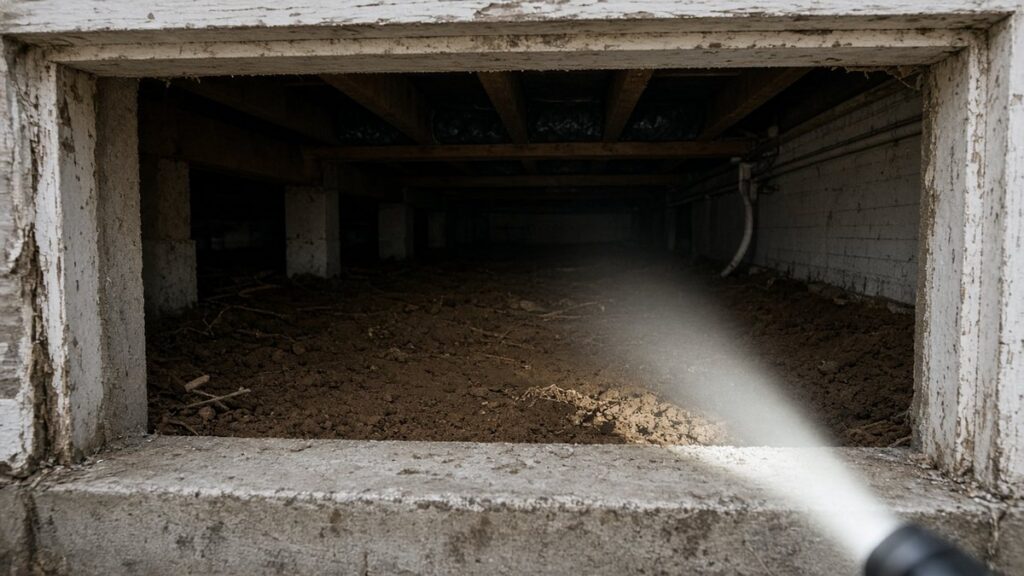
Some crawl spaces let you kneel, and some barely let you slide in. Crawl space height affects how easy it is to inspect, maintain and repair the area under your home. Here’s what homeowners in Isanti, Isanti County and across Minnesota should know.
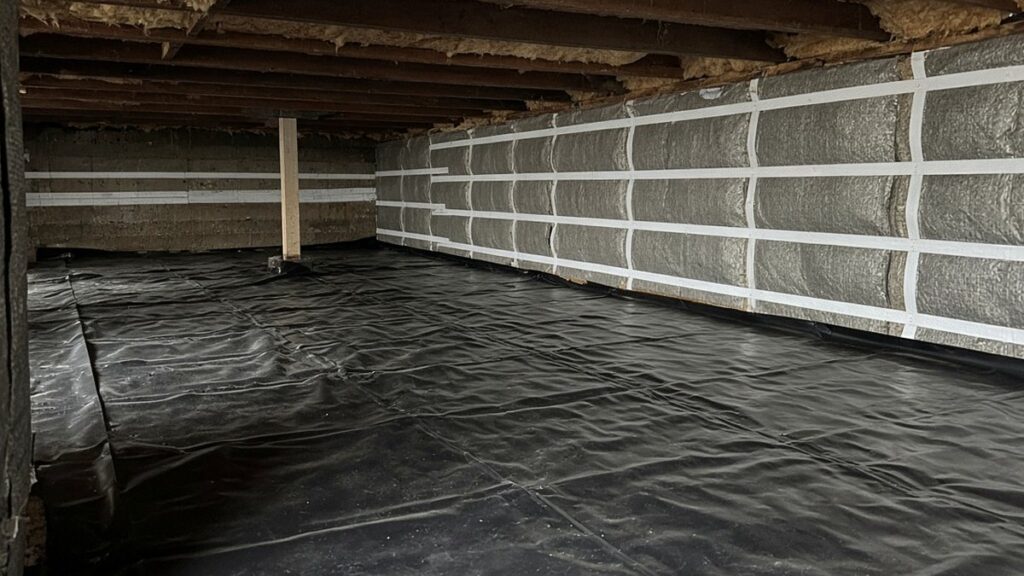
Table of Contents
Why height matters
- Inspections are harder in tight spaces, so problems go unnoticed.
- Plumbing and ductwork are harder to reach.
- Repairs like vapor barriers and insulation take more planning.
Why Minnesota crawl spaces get wet
Crawl spaces sit right on the soil, so moisture finds them easily:
- Bare dirt floors release water vapor constantly
- Vents let in humid summer air that condenses on cool surfaces
- Poor drainage sends roof and yard water toward the foundation
- Spring melt can push water up through the soil
Moisture in a crawl space doesn’t stay there. Air rises from the crawl space into the living space above. With that in mind, crawl space height becomes much easier to plan around.
Low crawl space challenges
- Limited access for people and materials
- Debris and old insulation that’s hard to remove
- Pests that go unnoticed
Practical steps
Look in with a flashlight from the access point each season, and note any water, sagging insulation or droppings.
Tight crawl space you can’t see into? We’re available 24/7. Call 320-280-3522 or Request an Estimate.
Crawl space height: warning signs to watch for
- Musty smells in rooms above the crawl space
- Cold or damp floors
- Visible mold on joists or insulation
- Sagging or wet insulation
- Standing water or damp soil
- Pests like insects and rodents, which are drawn to moisture
Common crawl space repair approaches
Depending on what’s found, crawl space work may include:
- Vapor barriers: heavy plastic sheeting over the soil to block ground moisture.
- Encapsulation: sealing the floor, walls and vents to create a closed, conditioned space.
- Drainage: directing water to a sump system so it doesn’t pool.
- Dehumidification: controlling humidity once the space is sealed.
- Insulation: on walls or rim joists to reduce cold floors.
Start with an inspection. The right fix depends on where moisture is coming from.
Your fall basement checklist
- Clean gutters after the leaves drop.
- Fix grading before the ground freezes.
- Service the sump pump and protect the discharge line.
- Seal leaking cracks before winter.
- Add window well covers before snow.
Common mistakes with crawl space height
- Leaving bare soil exposed. Ground moisture rises into the crawl space and the home above.
- Trapping water behind insulation. Insulating before fixing moisture can lead to rot and mold.
- Ignoring the access door and rim joists. Gaps let in cold air, moisture and pests.
- Never looking inside. Many crawl space problems go unnoticed for years.
What a good assessment should include
Whoever you hire, a good evaluation should:
- Look outside at gutters, downspouts, grading and window wells
- Look inside at walls, floors, cracks and the sump system
- Explain the cause, not just the symptom
- Lay out options, including simple fixes you can do yourself
- Give a written estimate before any work starts
At Secure Basement Solutions, we keep it no-pressure and education-first. You should understand the problem before you decide anything.
Questions to ask before you hire anyone
Before you pick a contractor, ask:
- What’s causing the problem?
- What are my options, and what are the trade-offs?
- Is there anything I can do myself first?
- What’s included in the estimate?
- Is a warranty offered, and what does it cover?
You can also check contractor licensing through the Minnesota Department of Labor and Industry. A good contractor will answer clearly and won’t rush you. Keep that in mind as you think through crawl space height.
How it all connects
Wet basements MN homeowners deal with rarely have just one cause. Water, soil pressure and frost are linked. That’s why basement waterproofing and foundation repair often go hand in hand. Good basement waterproofing MN work manages water, and good foundation repair MN work keeps walls stable. Fixing the cause protects both. Learn more about our crawl space repair service, or read about foundation repair in Minnesota.
Your next steps with crawl space height
- Write down what you see: where, when and how much water or movement.
- Take dated photos so changes are easy to compare.
- Handle the simple items like gutters, downspouts and clearing debris.
- Get a professional opinion if the problem returns, grows or affects safety.
Homeowners in Isanti and nearby communities can reach Secure Basement Solutions any time at 320-280-3522.
Trusted resources
The EPA’s guide to mold, moisture and your home explains why moisture control matters.
University of Minnesota Extension covers moisture in basements, including crawl spaces.
Serving Isanti and Isanti County
Isanti has grown quickly, so many homes are newer builds on former farmland near the Rum River. Secure Basement Solutions is veteran-owned and based in Mora, with more than 30 years of trade experience. We serve Isanti, Isanti County and communities across Minnesota. No pressure, education first. A little background on crawl space height makes these steps easier to follow.
Crawl space height: frequently asked questions
Is there a minimum crawl space height?
Building codes set requirements for new construction. Older homes vary.
Can a low crawl space be improved?
Moisture control and cleanup are often possible even in tight spaces.
Can crawl space moisture affect my health?
Moisture can lead to mold, and air from the crawl space moves into the home. See EPA guidance on mold and moisture.
How often should I check my crawl space?
At least twice a year, and after major storms or snowmelt.
Know what’s happening under your floor
Available 24/7. Call 320-280-3522 or Request an Estimate.