
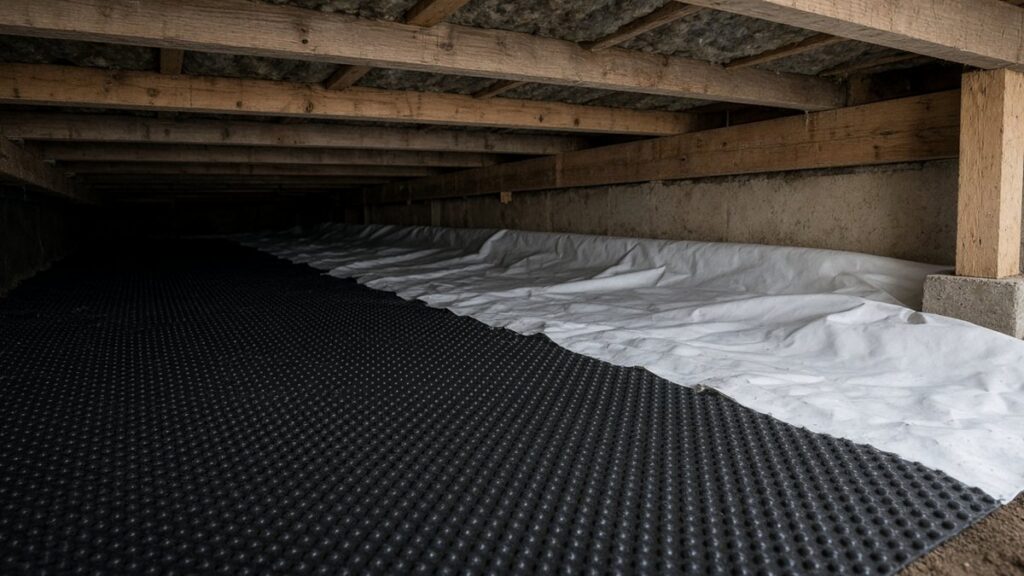
Some crawl spaces get water on the soil after heavy rain. Crawl space drainage matting gives that water a path to drain under the vapor barrier. This guide is written for homeowners in Ramsey, Anoka County and across Minnesota.
Table of Contents
How it works
Drainage matting is a dimpled or mesh layer laid on the soil. It creates space for water to move to a drain or sump.
When it helps
- Crawl spaces that get water after storms
- Encapsulation projects where water must be managed
What it doesn’t do
It doesn’t stop water from coming in. It just moves it.
Pairing with a sump
Matting often leads water to a crawl space sump pump.
Dealing with crawl space drainage matting? We’re available 24/7. Call 320-280-3522 or Request an Estimate.
Warning signs to watch for
- Pests like insects and rodents, which are drawn to moisture
- Musty smells in rooms above the crawl space
- Cold or damp floors
- Visible mold on joists or insulation
- Sagging or wet insulation
Why Minnesota crawl spaces get wet
Crawl spaces sit right on the soil, so moisture finds them easily:
- Bare dirt floors release water vapor constantly
- Vents let in humid summer air that condenses on cool surfaces
- Poor drainage sends roof and yard water toward the foundation
- Spring melt can push water up through the soil
Moisture in a crawl space doesn’t stay there. Air rises from the crawl space into the living space above.
Common crawl space repair approaches
Depending on what’s found, crawl space work may include:
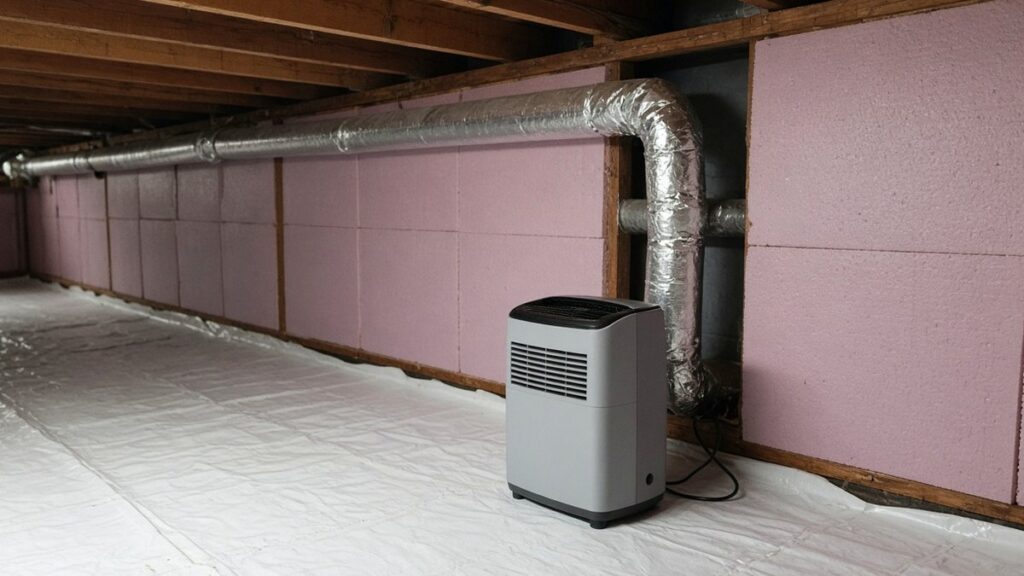
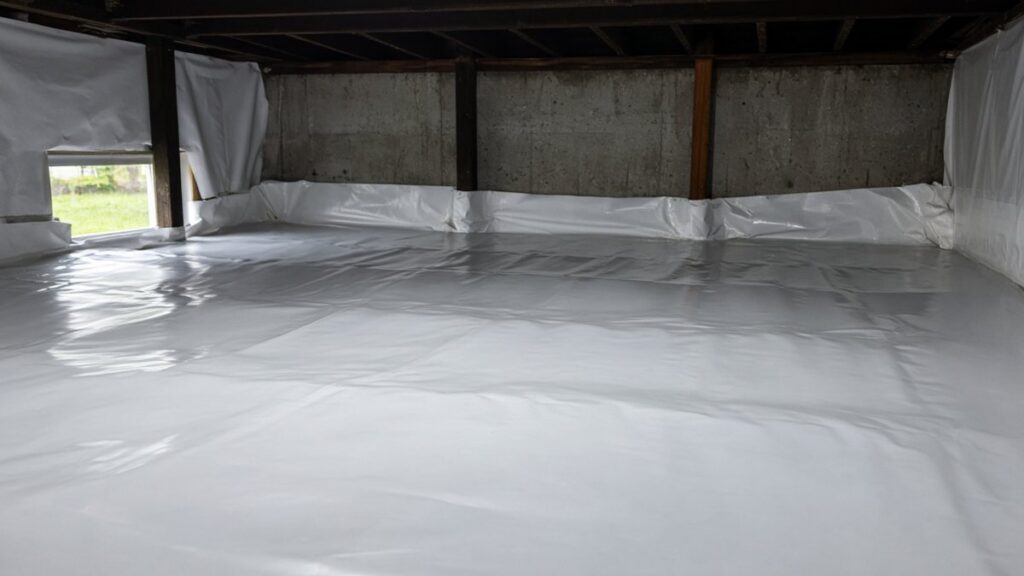
- Vapor barriers: heavy plastic sheeting over the soil to block ground moisture.
- Encapsulation: sealing the floor, walls and vents to create a closed, conditioned space.
- Drainage: directing water to a sump system so it doesn’t pool.
- Dehumidification: controlling humidity once the space is sealed.
- Insulation: on walls or rim joists to reduce cold floors.
Start with an inspection. The right fix depends on where moisture is coming from.
Common mistakes to avoid
- Leaving bare soil exposed. Ground moisture rises into the crawl space and the home above.
- Trapping water behind insulation. Insulating before fixing moisture can lead to rot and mold.
- Ignoring the access door and rim joists. Gaps let in cold air, moisture and pests.
Quick spring to-do list for Ramsey
In March, snowmelt and early rain often hit before the frost is out of the ground.
- Clear snow and ice from around downspout outlets.
- Look for water lines or damp spots along the floor edge.
- Pour a bucket of water in the sump pit to test it.
- Watch cracks after rain and note any changes.
- Fill low spots in the yard once the ground thaws.
Questions to ask before you hire anyone
Before you pick a contractor, ask:
- What’s causing the problem?
- What are my options, and what are the trade-offs?
- Is there anything I can do myself first?
- What’s included in the estimate?
- Is a warranty offered, and what does it cover?
You can also check contractor licensing through the Minnesota Department of Labor and Industry. A good contractor will answer clearly and won’t rush you.
How it all connects
Think of your basement as one system. Gutters, grading, drain tile, the sump pump and the walls all work together. When one part fails, you can end up with wet basements MN homeowners know too well. That’s why basement waterproofing MN plans and foundation repair MN plans should start with the cause. See our basement waterproofing and foundation repair pages. For more on crawl space drainage matting and related work, see our crawl space repair page.
Trusted resources
University of Minnesota Extension covers moisture in basements, including crawl spaces.
Serving Ramsey and Anoka County
Ramsey sits along the Mississippi River in Anoka County, with a mix of rural and suburban homes. From our home base in Mora, our veteran-owned team serves Ramsey, Anoka County and communities across Minnesota. We bring more than 30 years of trade experience and an education-first approach. Call us with questions about crawl space drainage matting any time.
Frequently asked questions
Do all crawl spaces need it?
No, only those with water.
Can I walk on it?
Usually, with the barrier on top.
Should crawl space vents be open or closed?
It depends on the setup. Many sealed crawl spaces close vents, but that should be done as part of a full plan.
Is a vapor barrier enough?
Sometimes. If water pools or humidity stays high, drainage or dehumidification may also be needed.
We’re here when you need us
No pressure, education first.
Questions about crawl space drainage matting? We’re available 24/7. Call 320-280-3522 or Request an Estimate.