
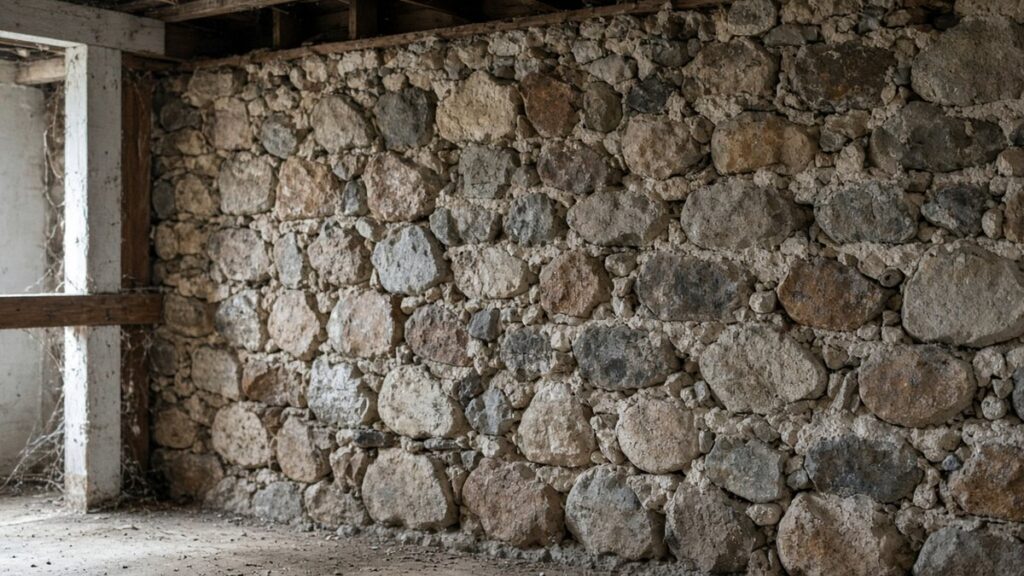
Many older Minnesota homes have foundations made from clay tile blocks. A clay tile block foundation looks different from concrete block and needs a little extra care. This guide is written for homeowners in Milaca, Mille Lacs County and across Minnesota.
Table of Contents
What clay tile block is
Clay tile blocks are hollow, fired clay units, often with a ribbed face. They were used in many older homes.
Common problems
- Cracking of the clay faces
- Spalling where the face breaks off
- Mortar wear at joints
- Moisture coming through
- Bowing under soil pressure
Why they’re sensitive
Clay tile is more brittle than concrete. Water that gets in can freeze and pop off the face. Heavy soil pressure can crack the units.
Repair options
- Tuckpointing worn joints
- Patching damaged faces
- Reinforcing bowing walls
- Drainage fixes to lower moisture
Moisture control matters
Keeping water away from the wall slows wear. Check grading, gutters and drainage.
Questions about clay tile block foundation? We’re available 24/7. Call 320-280-3522 or Request an Estimate.
Warning signs to watch for
- Sticking doors and windows upstairs
- Gaps around window frames or between walls and ceilings
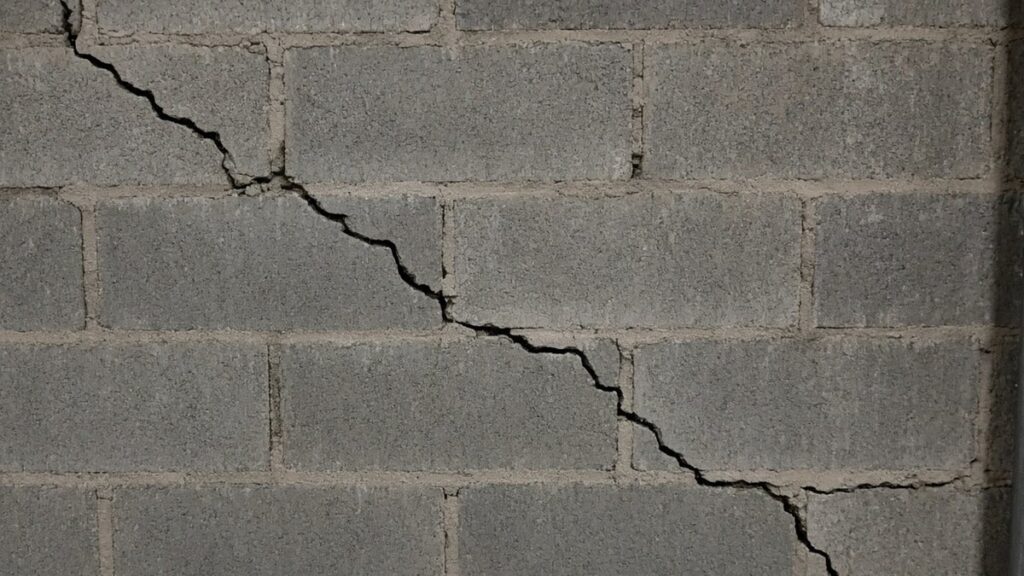
- Horizontal cracks in block or poured walls
- Stair-step cracks in block mortar joints
- Walls that bow, lean or bulge inward
Why Minnesota foundations move
Foundations in Minnesota deal with forces many other states don’t:
- Frost heave: water in soil freezes, expands and pushes on footings and walls.
- Saturated soil in spring adds weight and pressure against basement walls.
- Clay soils swell when wet and shrink when dry, so walls get squeezed and released.
- Poor drainage keeps soil wet right next to the foundation.
Over years, these forces can crack, bow or shift foundation walls.
Common foundation repair approaches
The right approach depends on what’s moving and why. Common methods include:
- Wall anchors: plates on the inside wall connected to anchors in the yard, used to stabilize bowing walls.
- Wall braces or beams: steel supports that brace a wall from footing to floor joists.
- Crack repair: sealing cracks after the cause has been addressed.
- Drainage improvements: reducing the water and frost pressure that caused movement in the first place.
- Excavation and rebuild: for severe damage, part of a wall may need to be rebuilt.
Any structural concern should be evaluated in person. Photos help, but they can’t replace an on-site look.
Common mistakes to avoid
- Choosing a fix before knowing the cause. The right repair depends on why the wall or slab moved.
- Filling a structural crack and forgetting it. A cosmetic patch can hide movement that’s still happening.
- Skipping documentation. Without dated photos and measurements, it’s hard to tell if a crack is changing.
Quick winter to-do list for Milaca
Late winter is when snow piles are biggest, so it’s smart to plan for the melt now.
- Walk the basement after every thaw.
- Keep downspouts clear of ice so meltwater can drain.
- Make sure the sump pit isn’t freezing or running nonstop.
- Note any damp spots with a date and photo.
- Plan spring projects now so you’re not waiting later.
Questions to ask before you hire anyone
Before you pick a contractor, ask:
- What’s causing the problem?
- What are my options, and what are the trade-offs?
- Is there anything I can do myself first?
- What’s included in the estimate?
- Is a warranty offered, and what does it cover?
You can also check contractor licensing through the Minnesota Department of Labor and Industry. A good contractor will answer clearly and won’t rush you.
How it all connects
Most wet basements MN homeowners deal with come from more than one cause. Water, frost and soil pressure work together. That’s why basement waterproofing and foundation repair often go hand in hand. Good basement waterproofing MN work controls water, and good foundation repair MN work keeps walls stable. For more on clay tile block foundation and related work, see our foundation repair page.
Trusted resources
University of Minnesota Extension explains how water around foundations contributes to problems in its guide to moisture in basements.
Serving Milaca and Mille Lacs County
Milaca is the Mille Lacs County seat, and the Rum River runs through town. Based in Mora and veteran-owned, Secure Basement Solutions brings 30+ years of trade experience to Milaca, Mille Lacs County and communities across Minnesota. Expect clear answers and no pressure. We can help with clay tile block foundation and any other basement questions you have.
Frequently asked questions
Are clay tile foundations weak?
They can be more brittle, but many still serve well with care.
Can clay tile walls be waterproofed?
Yes, with care to the material.
Will foundation repair stop my basement from leaking?
Not always. Structural repair and waterproofing solve different problems, though they’re often planned together.
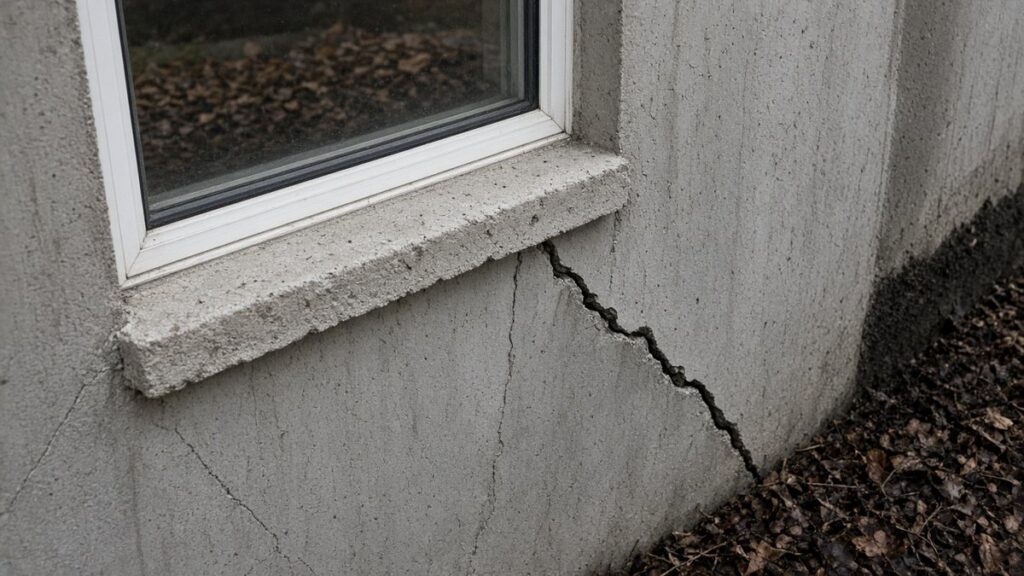
How do I track whether a crack is growing?
Mark the ends with a pencil, write the date, measure the width and take photos from the same spot every month or two.
Let’s take a look
No pressure, education first.
Questions about clay tile block foundation? We’re available 24/7. Call 320-280-3522 or Request an Estimate.