
Summer is a good time for outside work. Here’s how the exterior waterproofing process usually works, step by step. This guide is written for homeowners in Zimmerman, Sherburne County and across Minnesota.
Table of Contents
Step 1: Planning
Utility lines are marked. Landscaping and decks may need to be moved.
Step 2: Digging
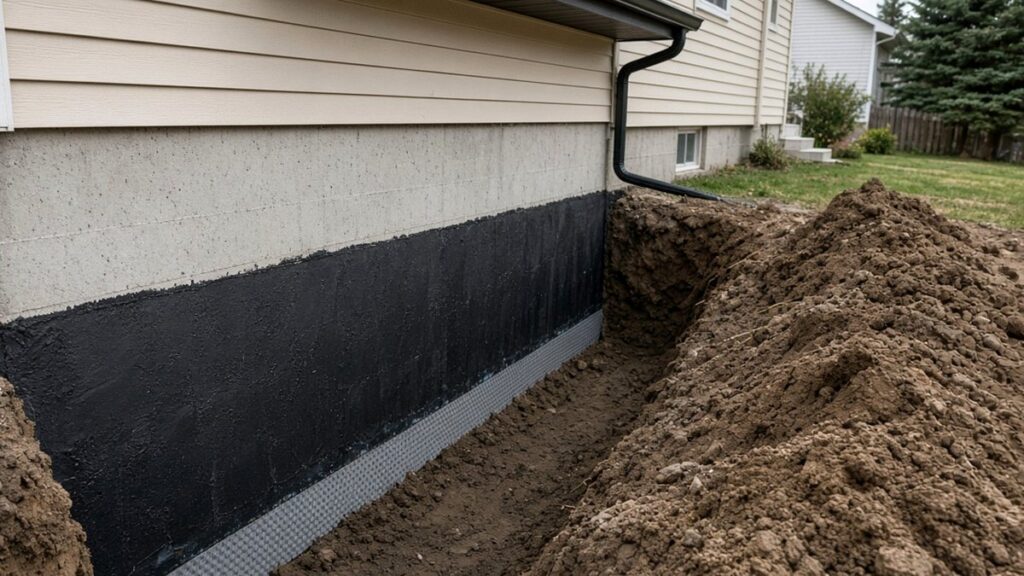
Soil is dug away from the wall down to the footing.
Step 3: Cleaning and repairs
The wall is cleaned. Cracks are repaired.
Step 4: Coating and membrane
A waterproof coating goes on, often with a dimple membrane over it.
Step 5: Drain tile
New drain tile is laid at the footing with gravel and fabric.
Step 6: Backfill and grading
Soil is put back and sloped away from the house.
When the exterior waterproofing process is a fit
- Walls need work from outside
- Finished basements you don’t want to disturb
- Water enters high on the wall
Things to consider
The exterior waterproofing process takes more digging than interior systems. Weather, access and landscaping all matter.
Questions about exterior waterproofing process? We’re available 24/7. Call 320-280-3522 or Request an Estimate.
Warning signs to watch for
- White, chalky residue (efflorescence) on concrete or block
- Musty smells that linger even when the basement looks dry
- Peeling paint or bubbling coatings on walls
- Rust on metal shelving, appliance legs or furnace bases
- Water stains on stored boxes, carpet or drywall
The Minnesota factors behind wet basements
Most basement water problems in Minnesota come back to the same handful of causes:
- Saturated soil after snowmelt or long rains
- Hydrostatic pressure pushing water through any weak spot
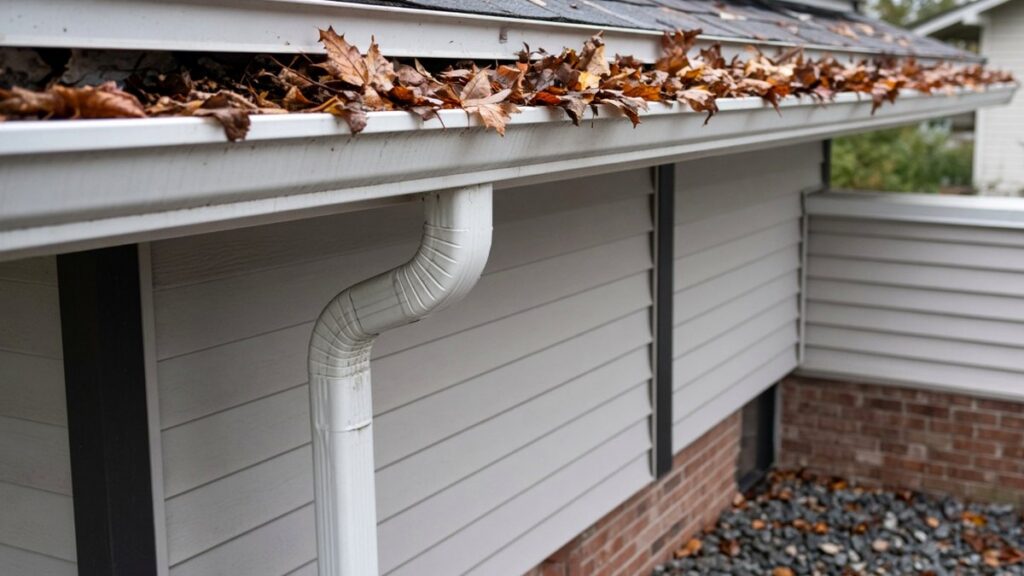
- Roof water dumped too close to the foundation
- Settled backfill that slopes toward the house
- Aging drain tile that clogs with silt over time
Knowing the cause matters, because the right fix depends on where the water starts.
How professionals typically handle it
There’s no one-size-fits-all fix. Common basement waterproofing approaches include:
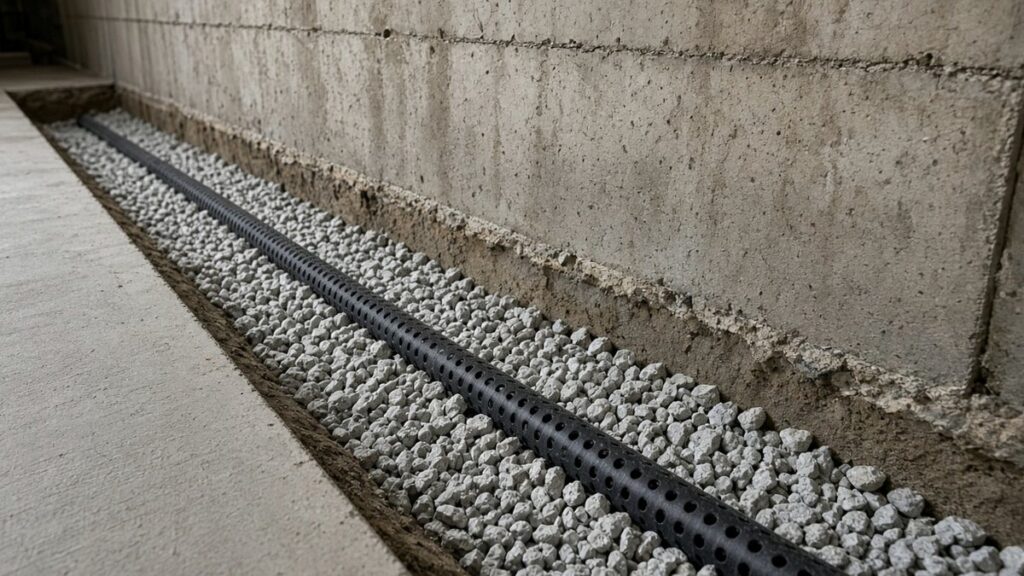
- Interior drain tile: a perforated pipe installed along the inside perimeter of the footing that collects water and sends it to a sump pit.
- Sump pump systems: pump collected water out and away from the house.
- Crack repair: injection products seal specific leaking cracks.
- Exterior drainage corrections: grading, downspout extensions and window well drains reduce how much water reaches the walls.
- Humidity control: dehumidifiers manage moisture that isn’t a true leak.
A good assessment looks at the whole picture, inside and out, before recommending anything.
Common mistakes to avoid
- Ignoring the outside. Gutters, downspouts and grading cause many wet basements MN homeowners deal with.
- Finishing too soon. Drywall and carpet over an untested wall can hide water until damage is done.
- Waiting for the next storm. Small seepage tends to grow with each wet season.
Summer basement checklist for Zimmerman
August is often humid, with heavy storms mixed between dry stretches.
- Run a dehumidifier and keep humidity moderate.
- Check after thunderstorms for new water.
- Look at landscaping that may trap water by the walls.
- Inspect the crawl space for moisture and pests.
- Plan projects while the weather is good.
Questions to ask before you hire anyone
Before you pick a contractor, ask:
- What’s causing the problem?
- What are my options, and what are the trade-offs?
- Is there anything I can do myself first?
- What’s included in the estimate?
- Is a warranty offered, and what does it cover?
You can also check contractor licensing through the Minnesota Department of Labor and Industry. A good contractor will answer clearly and won’t rush you.
How it all connects
No single product fixes every basement. Wet basements MN homes face need the right mix of drainage, sealing and support. Basement waterproofing MN work keeps water out, and foundation repair MN work keeps the structure sound. Our basement waterproofing and foundation repair pages explain both. For more on exterior waterproofing process and related work, see our basement waterproofing page.
Trusted resources
For background on why moisture matters, see the EPA’s guide to mold, moisture and your home.
Serving Zimmerman and Sherburne County
Zimmerman sits near Lake Fremont in Sherburne County, on the sandy soils of the Anoka Sand Plain. From our home base in Mora, our veteran-owned team serves Zimmerman, Sherburne County and communities across Minnesota. We bring more than 30 years of trade experience and an education-first approach. Call us with questions about exterior waterproofing process any time.
Frequently asked questions
How long does exterior waterproofing take?
It depends on the job size and access.
Can it be done in winter?
Usually not when the ground is frozen.
Is basement waterproofing worth it if I don’t plan to finish the basement?
Yes. Water damages stored items, raises humidity in the whole house and can encourage mold, finished or not.
Can I waterproof a basement in winter?
Interior work can often be done year-round. Ask about scheduling when you request an estimate.
Get a clear answer
No pressure, education first.
Day or night, 24/7: call 320-280-3522 or Request an Estimate. We’ll help with exterior waterproofing process in Zimmerman and nearby towns.