
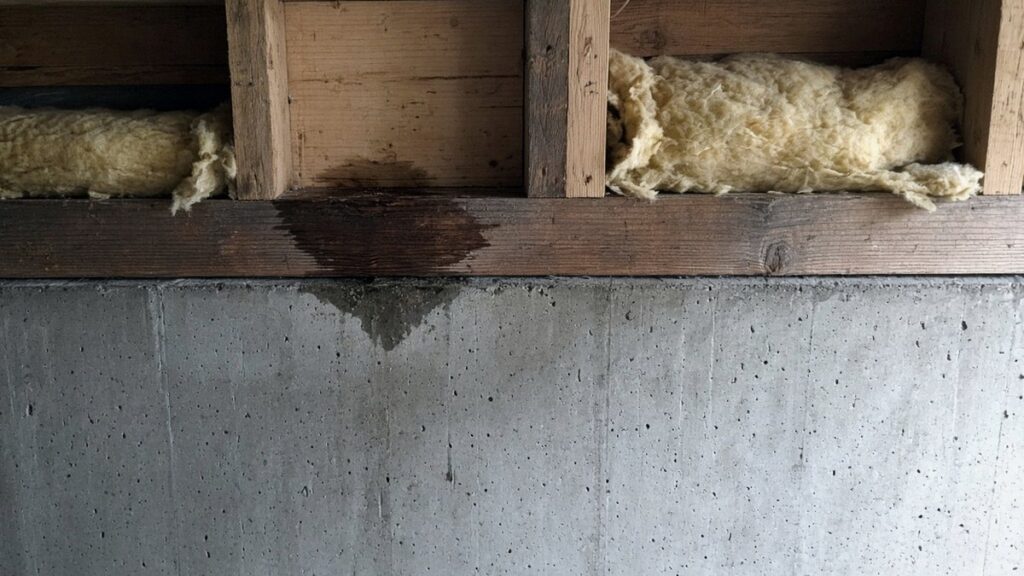
Water running down the top of a basement wall doesn’t always come through the concrete. Rim joist leaks start above the foundation, where the house framing sits on the wall. This guide is written for homeowners in Forest Lake, Washington County and across Minnesota.
Table of Contents
Where the rim joist is
The rim joist is the band of wood around the edge of the floor framing. It sits on the sill plate on top of the foundation. Siding covers it on the outside.
Common causes of rim joist leaks
- Gutters overflowing onto the siding
- Deck ledgers without proper flashing
- Gaps around hose bibs, dryer vents and cables
- Soil or mulch piled up to the siding
- Window and door leaks above
How to tell rim joist leaks from wall leaks
Rim joist leaks show up at the very top of the wall, often as stains on the sill plate or wet insulation. Wall leaks start lower, at cracks or the floor edge.
Fall fixes
- Clean gutters once leaves are down.
- Seal openings where pipes and vents pass through.
- Pull soil and mulch back so there’s a gap above the foundation.
- Check flashing at decks and doors.
Why fall matters
Fall rain and early snow melt run down the siding. Fixing rim joist leaks now keeps wood dry through winter, when wet wood can freeze and frost can build.
Dealing with rim joist leaks? We’re available 24/7. Call 320-280-3522 or Request an Estimate.
Warning signs to watch for
- White, chalky residue (efflorescence) on concrete or block
- Musty smells that linger even when the basement looks dry
- Peeling paint or bubbling coatings on walls
- Rust on metal shelving, appliance legs or furnace bases
- Water stains on stored boxes, carpet or drywall
The Minnesota factors behind wet basements
Most basement water problems in Minnesota come back to the same handful of causes:
- Saturated soil after snowmelt or long rains
- Hydrostatic pressure pushing water through any weak spot
- Roof water dumped too close to the foundation
- Settled backfill that slopes toward the house
- Aging drain tile that clogs with silt over time
Knowing the cause matters, because the right fix depends on where the water starts.
How professionals typically handle it
There’s no one-size-fits-all fix. Common basement waterproofing approaches include:
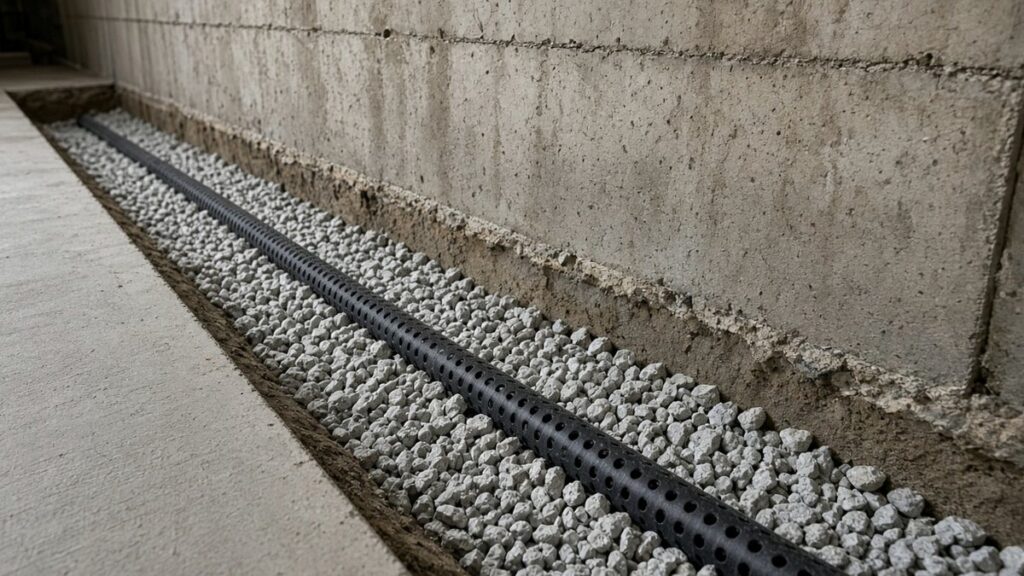
- Interior drain tile: a perforated pipe installed along the inside perimeter of the footing that collects water and sends it to a sump pit.
- Sump pump systems: pump collected water out and away from the house.
- Crack repair: injection products seal specific leaking cracks.
- Exterior drainage corrections: grading, downspout extensions and window well drains reduce how much water reaches the walls.
- Humidity control: dehumidifiers manage moisture that isn’t a true leak.
A good assessment looks at the whole picture, inside and out, before recommending anything.
Common mistakes to avoid
- Patching only the symptom. Sealing a damp spot without finding where the water comes from usually means it shows up somewhere else.
- Ignoring the outside. Gutters, downspouts and grading cause many wet basements MN homeowners deal with.
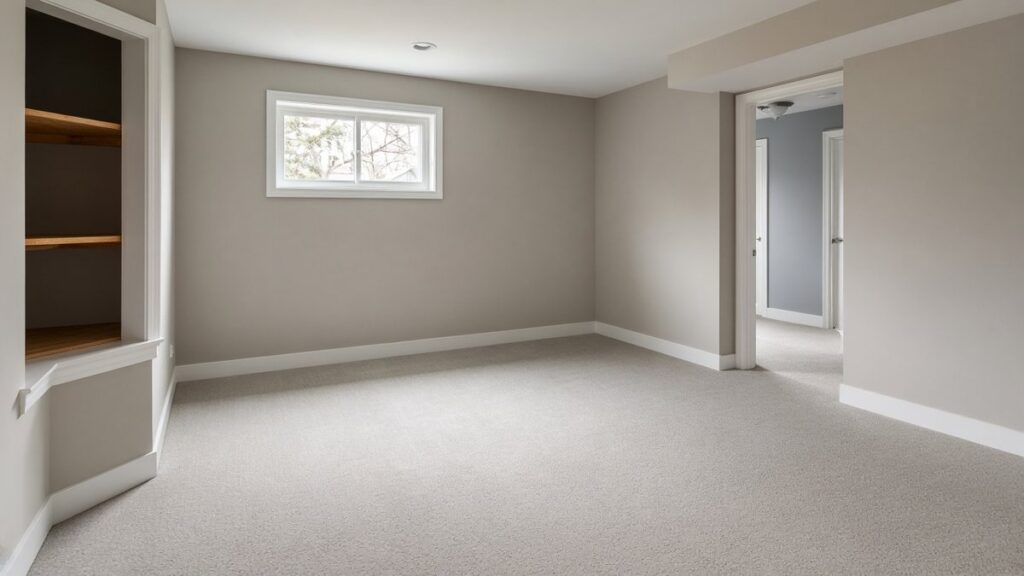
- Finishing too soon. Drywall and carpet over an untested wall can hide water until damage is done.
Spring basement checklist for Forest Lake
By May, the frost is out and it’s a good time to look at drainage around the house.
- Test the sump pump before the big melt.
- Extend downspouts well away from the house.
- Walk the basement after each melt or rain.
- Clear window well drains.
- Check grading where soil settled over winter.
Questions to ask before you hire anyone
Before you pick a contractor, ask:
- What’s causing the problem?
- What are my options, and what are the trade-offs?
- Is there anything I can do myself first?
- What’s included in the estimate?
- Is a warranty offered, and what does it cover?
You can also check contractor licensing through the Minnesota Department of Labor and Industry. A good contractor will answer clearly and won’t rush you.
How it all connects
No single product fixes every basement. Wet basements MN homes face need the right mix of drainage, sealing and support. Basement waterproofing MN work keeps water out, and foundation repair MN work keeps the structure sound. Our basement waterproofing and foundation repair pages explain both. For more on rim joist leaks and related work, see our basement waterproofing page.
Trusted resources
For background on why moisture matters, see the EPA’s guide to mold, moisture and your home.
Serving Forest Lake and Washington County
Forest Lake surrounds the lake of the same name, with lake homes and newer neighborhoods. From our home base in Mora, our veteran-owned team serves Forest Lake, Washington County and communities across Minnesota. We bring more than 30 years of trade experience and an education-first approach. We can help with rim joist leaks and any other basement questions you have.
Frequently asked questions
Can rim joist leaks cause rot?
Yes. Repeated wetting can soften the rim and sill over time.
Should I remove insulation to check?
If you see stains, pulling back a section helps find the source.
How do I know if I need drain tile?
Recurring water at the floor-wall joint after rain or melt is a common sign. An on-site assessment can confirm it.
Will a waterproof paint stop my basement leak?
Coatings can help with minor dampness, but they usually can’t hold back water under pressure. Leaks from saturated soil normally need drainage.
We’re here when you need us
No pressure, education first.
Need help with rim joist leaks in Forest Lake? We’re available 24/7. Call 320-280-3522 or Request an Estimate and tell us what you’re seeing.