
People use “French drain” and “drain tile” like they mean the same thing. They’re close cousins, but the French drain vs drain tile difference matters when you’re trying to fix a wet basement. This guide is written for homeowners in Quamba, Kanabec County and across Minnesota.
Table of Contents
What a French drain is
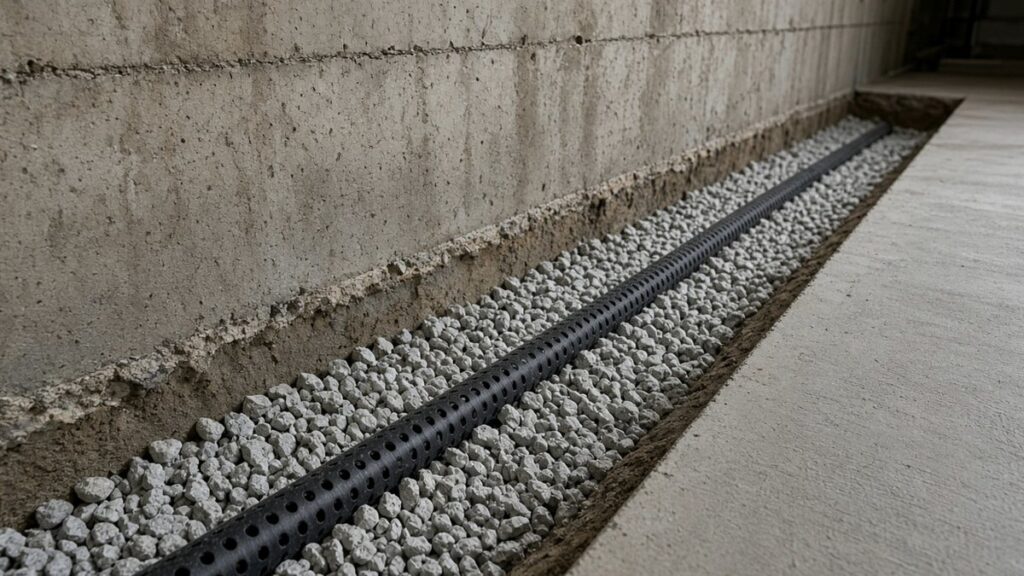
A French drain is a trench filled with gravel, often with a perforated pipe inside. It’s usually in the yard. It catches surface and shallow groundwater and moves it somewhere lower.
What drain tile is
Drain tile is perforated pipe laid along the footing of a foundation, either outside or inside the basement. It collects water near the base of the wall and carries it to a sump pit or to daylight.
French drain vs drain tile: the key differences
- Location: French drains are often in the yard; drain tile hugs the foundation.
- Purpose: French drains catch water before it reaches the house; drain tile handles water right at the basement.
- Depth: drain tile sits at footing depth; French drains are often shallower.
- Outlet: drain tile often ends at a sump pit; French drains need a low spot or outlet.
When a French drain helps
- Soggy yards that drain toward the house
- Water running down a hill into the foundation area
- Low spots that hold water after storms
When drain tile is the fix
- Water at the floor edge in the basement
- Hydrostatic pressure from groundwater
- Leaks that keep coming back along the base of the wall
Using both
Some homes benefit from both. A French drain catches water in the yard, and drain tile handles what still reaches the foundation.
Where the water goes
Both need a place to send water. A French drain without a good outlet just becomes a buried puddle.
Need help with french drain vs drain tile? We’re available 24/7. Call 320-280-3522 or Request an Estimate.
Warning signs to watch for
- Rust on metal shelving, appliance legs or furnace bases
- Water stains on stored boxes, carpet or drywall
- Damp spots or dark lines on walls or along the floor-wall joint
- White, chalky residue (efflorescence) on concrete or block
- Musty smells that linger even when the basement looks dry
The Minnesota factors behind wet basements
Most basement water problems in Minnesota come back to the same handful of causes:
- Saturated soil after snowmelt or long rains
- Hydrostatic pressure pushing water through any weak spot
- Roof water dumped too close to the foundation
- Settled backfill that slopes toward the house
- Aging drain tile that clogs with silt over time
Knowing the cause matters, because the right fix depends on where the water starts.
How professionals typically handle it
There’s no one-size-fits-all fix. Common basement waterproofing approaches include:
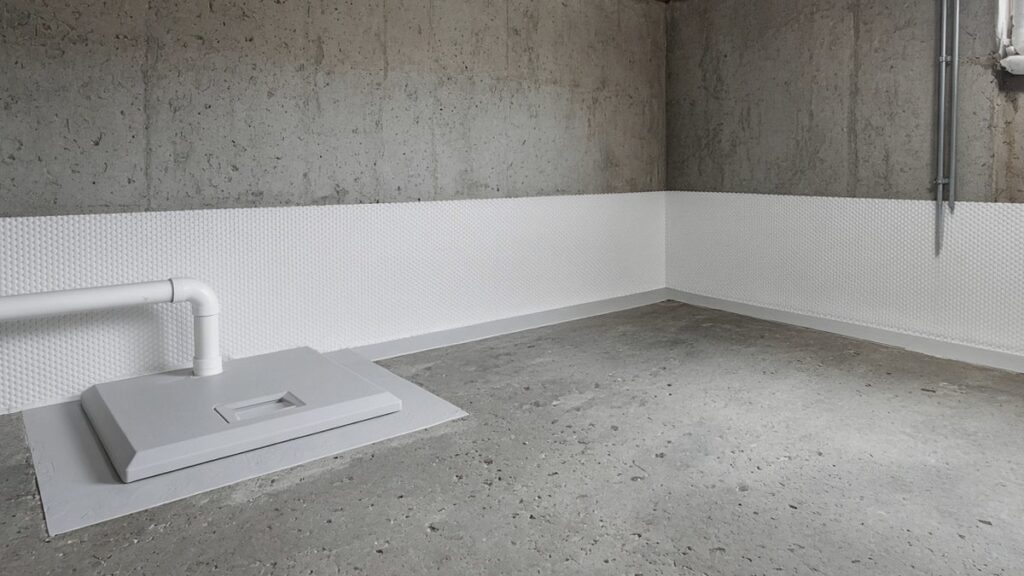
- Interior drain tile: a perforated pipe installed along the inside perimeter of the footing that collects water and sends it to a sump pit.
- Sump pump systems: pump collected water out and away from the house.
- Crack repair: injection products seal specific leaking cracks.
- Exterior drainage corrections: grading, downspout extensions and window well drains reduce how much water reaches the walls.
- Humidity control: dehumidifiers manage moisture that isn’t a true leak.
A good assessment looks at the whole picture, inside and out, before recommending anything.
Common mistakes to avoid
- Waiting for the next storm. Small seepage tends to grow with each wet season.
- Patching only the symptom. Sealing a damp spot without finding where the water comes from usually means it shows up somewhere else.
- Ignoring the outside. Gutters, downspouts and grading cause many wet basements MN homeowners deal with.
Quick winter to-do list for Quamba
Deep January cold is a good time to spot frost, condensation and new cracks indoors.
- Walk the basement after every thaw.
- Keep downspouts clear of ice so meltwater can drain.
- Make sure the sump pit isn’t freezing or running nonstop.
- Note any damp spots with a date and photo.
- Plan spring projects now so you’re not waiting later.
What a good assessment should include
Whoever you hire, a good evaluation should:
- Look outside at gutters, downspouts, grading and window wells
- Look inside at walls, floors, cracks and the sump system
- Explain the cause, not just the symptom
- Lay out options, including simple fixes you can do yourself
- Give a written estimate before any work starts
At Secure Basement Solutions, we keep it no-pressure and education-first. You should understand the problem before you decide anything.
How it all connects
Most wet basements MN homeowners deal with come from more than one cause. Water, frost and soil pressure work together. That’s why basement waterproofing and foundation repair often go hand in hand. Good basement waterproofing MN work controls water, and good foundation repair MN work keeps walls stable. For more on french drain vs drain tile and related work, see our basement waterproofing page.
Trusted resources
For background on why moisture matters, see the EPA’s guide to mold, moisture and your home.
Serving Quamba and Kanabec County
Quamba is a small Kanabec County community where many homes sit on rural lots with private drainage. Secure Basement Solutions is veteran-owned and based in Mora, with more than 30 years of trade experience. We serve Quamba, Kanabec County and communities across Minnesota. No pressure, education first. Call us with questions about french drain vs drain tile any time.
Frequently asked questions
Is drain tile actually made of tile?
Older systems used clay tile sections. Today it’s usually plastic pipe.
Can a French drain stop basement leaks?
It can help if water is coming from the yard, but it won’t fix every leak.
Can I waterproof a basement in winter?
Interior work can often be done year-round. Ask about scheduling when you request an estimate.
How do I know if I need drain tile?
Recurring water at the floor-wall joint after rain or melt is a common sign. An on-site assessment can confirm it.
We’re here when you need us
No pressure, education first.
Day or night, 24/7: call 320-280-3522 or Request an Estimate. We’ll help with french drain vs drain tile in Quamba and nearby towns.